The University Psychological Counseling Unit at the College of Physical Education and Sports Sciences at University
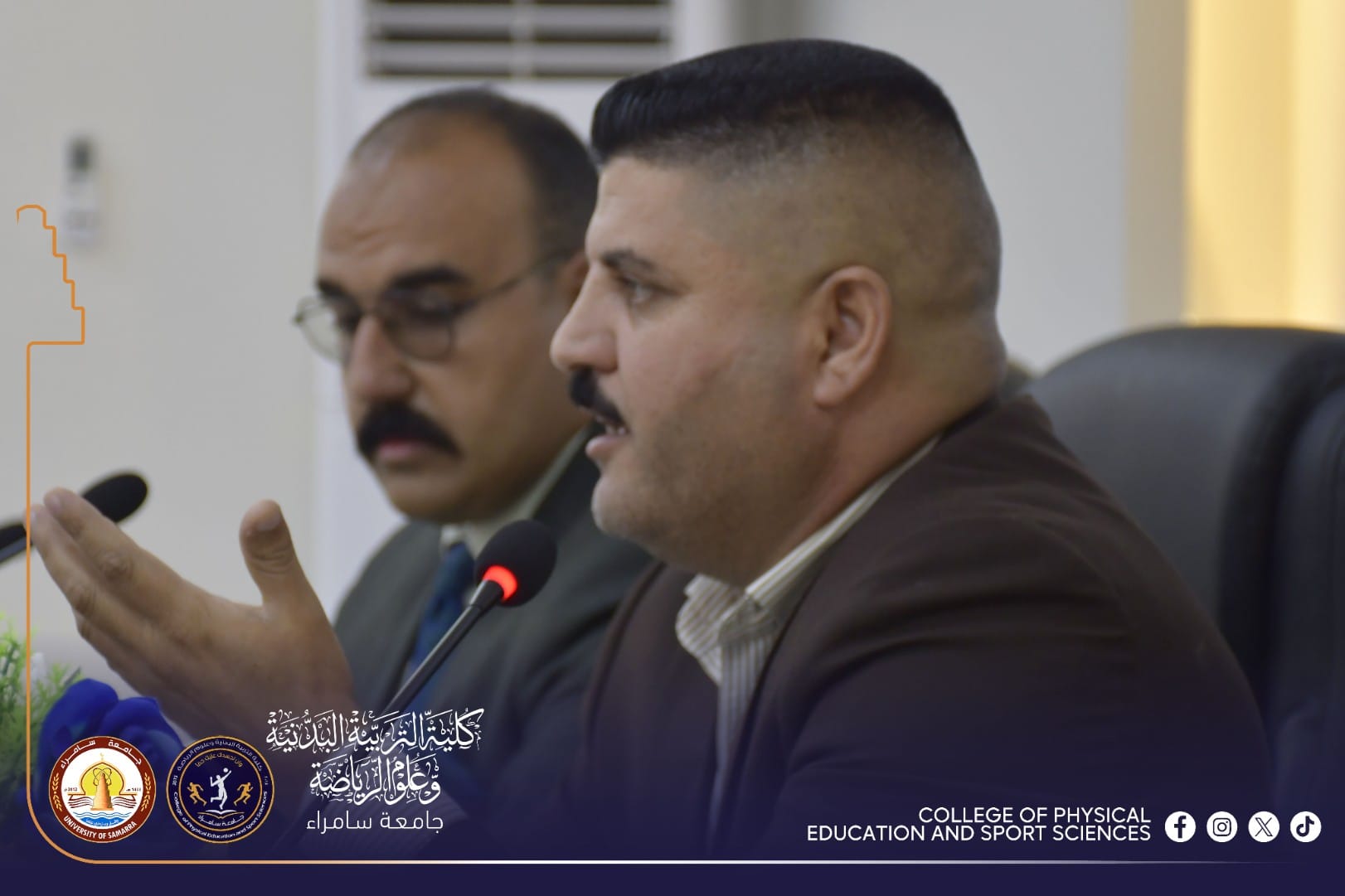
of Samarra, in cooperation with the Samarra Department for Countering Extremism, organized an awareness seminar entitled “The Psychology of Extremism: The Psychological and Social Roots of Intellectual Radicalization.” The seminar was delivered by Assistant Professor Dr. Mohammed Alwan Shukr and Mr. Abdullah Talib Al-Naqib, in the presence of the Assistant President of the University for Scientific Affairs, Professor Dr. Kamal Hussein Ahmed, the Dean of the College, Professor Dr. Saad Abbas Abd, in addition to a number of faculty members and administrative staff.
The seminar aimed to provide a comprehensive scientific analysis of the psychology of extremism, with a particular focus on the psychological and social factors that contribute to the formation of intellectual radicalization.
Mr. Al-Naqib explained the concepts of extremism and intellectual radicalization, highlighting the relationship between the two notions, while also addressing the psychological and social roots underlying extremist ideologies.
Meanwhile, Dr. Shukr reviewed the most prominent theories and conceptual frameworks that seek to explain this complex phenomenon, drawing upon reliable scientific sources in order to provide a comprehensive perspective that contributes to raising awareness and developing effective strategies for prevention and intervention.
Within the same context, the speakers discussed the Staircase Model, which conceptualizes radicalization as a gradual process, comparing it to ascending a narrow staircase that ultimately culminates in terrorist activity.
In conclusion, the seminar produced several recommendations, most notably that combating extremism should not be limited to security measures alone, but rather requires a comprehensive approach that includes promoting critical thinking, fostering positive identities, ensuring equitable opportunities, addressing social grievances, and dismantling extremist ideologies while offering constructive alternatives that provide individuals with meaning and recognition through positive channels, thereby contributing to the development of tolerant and open societies