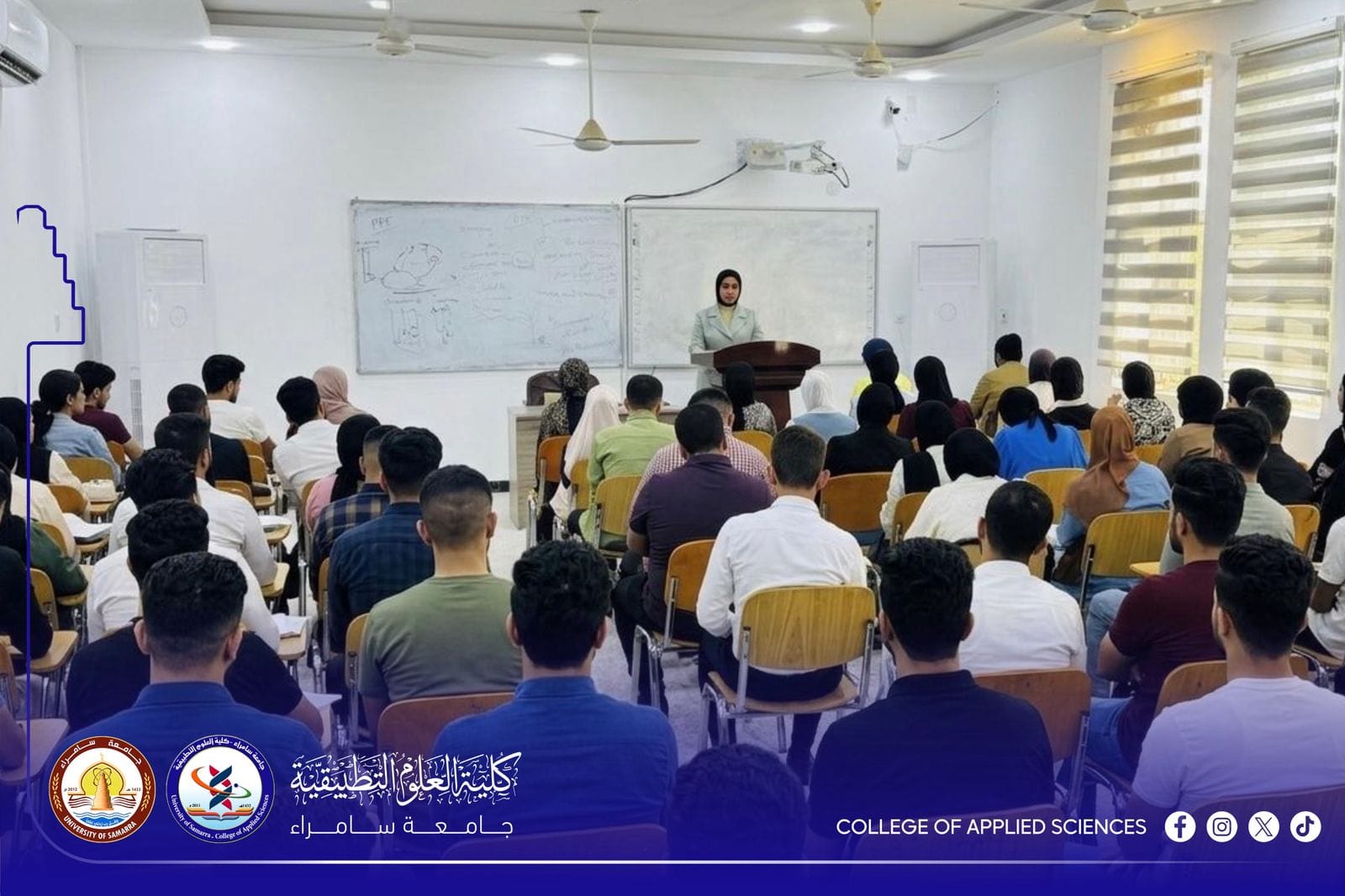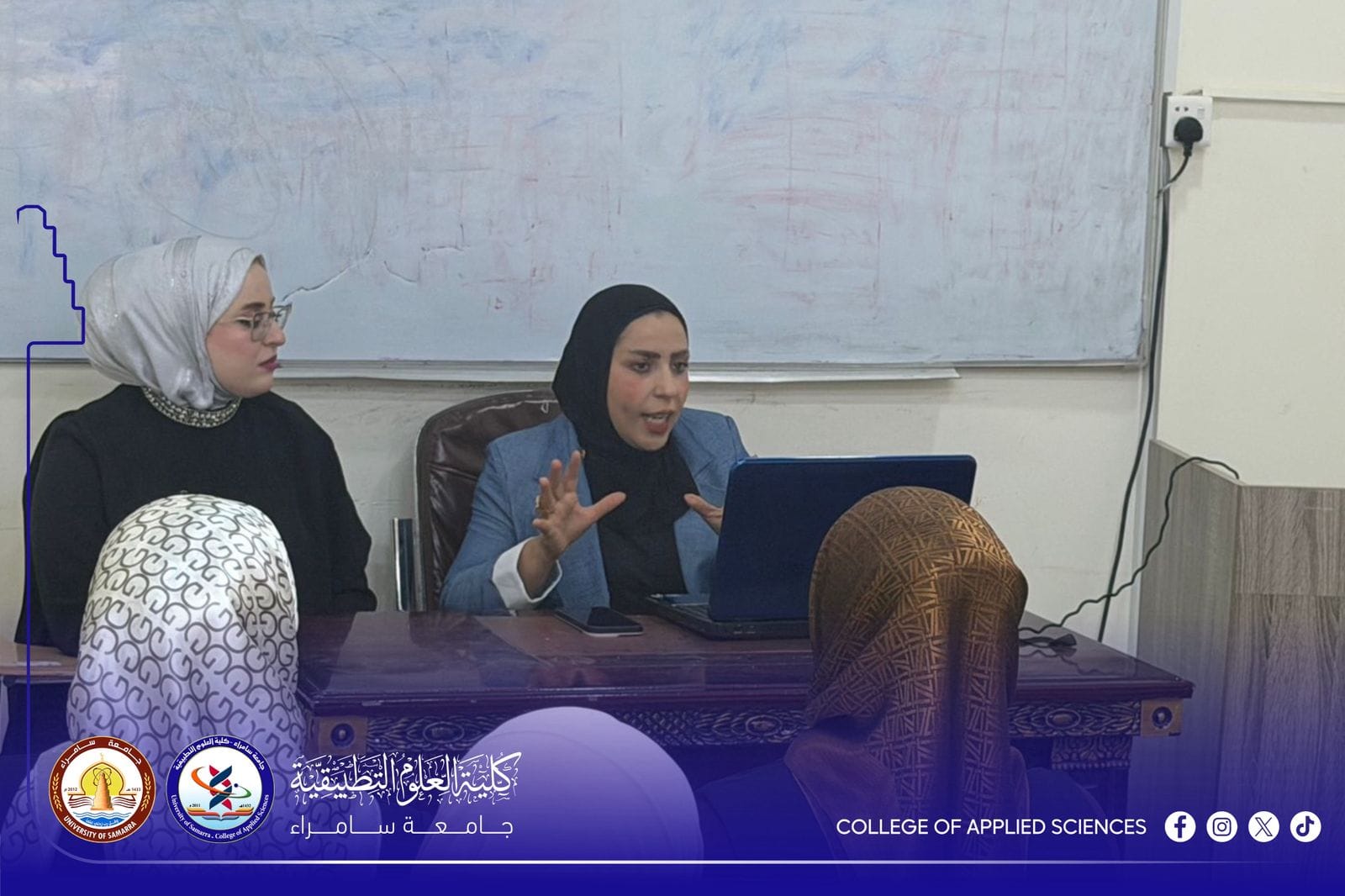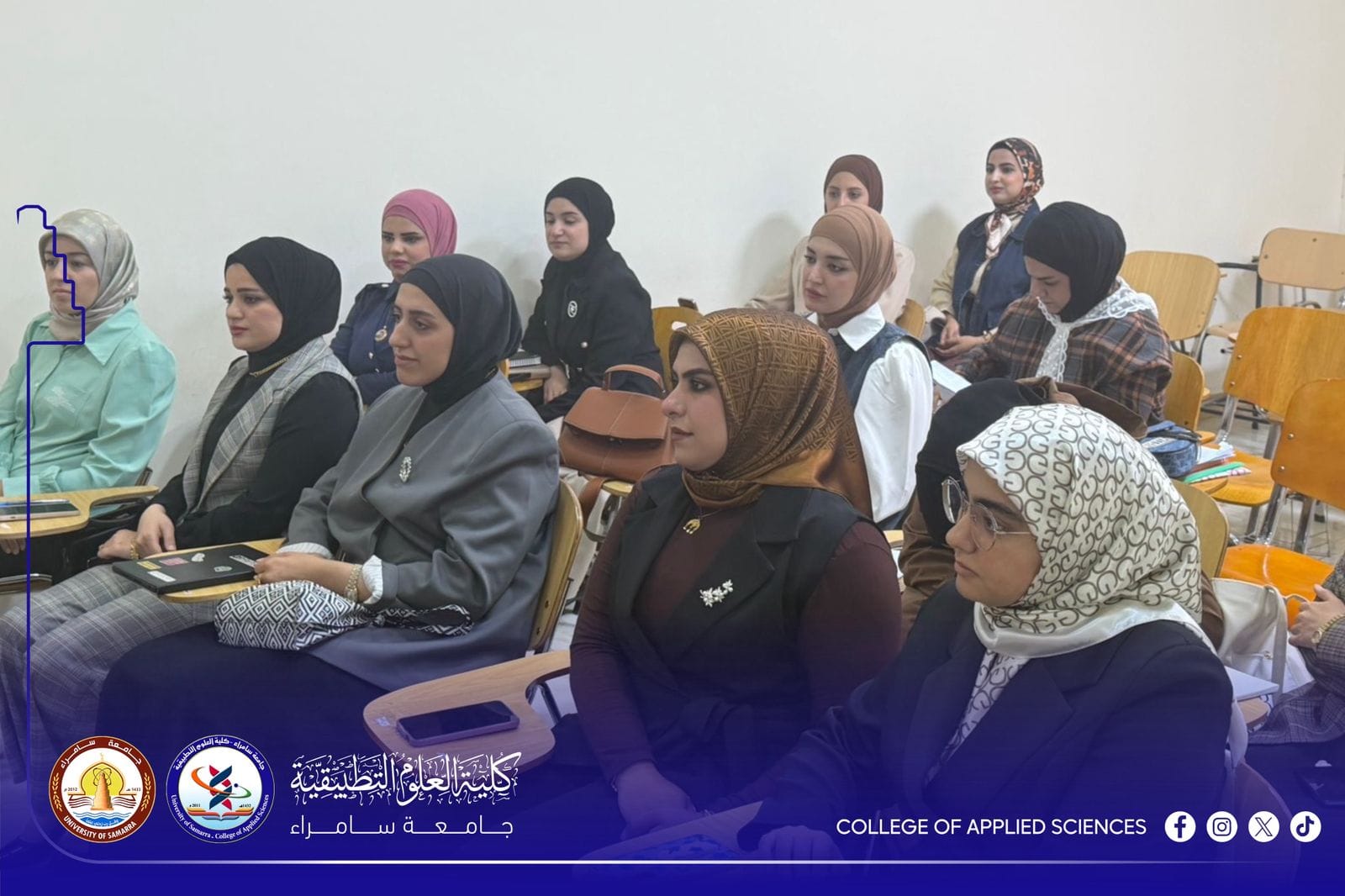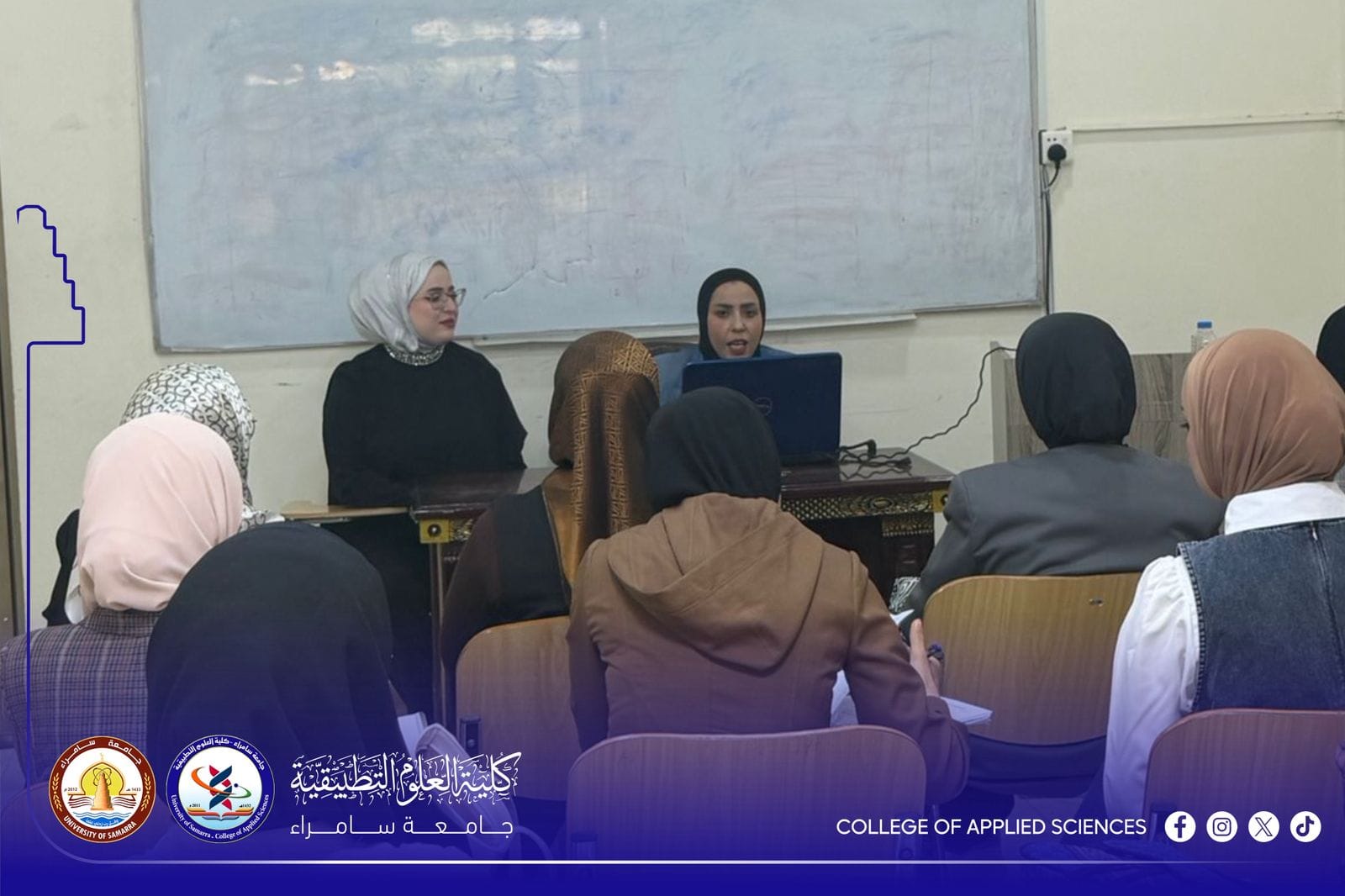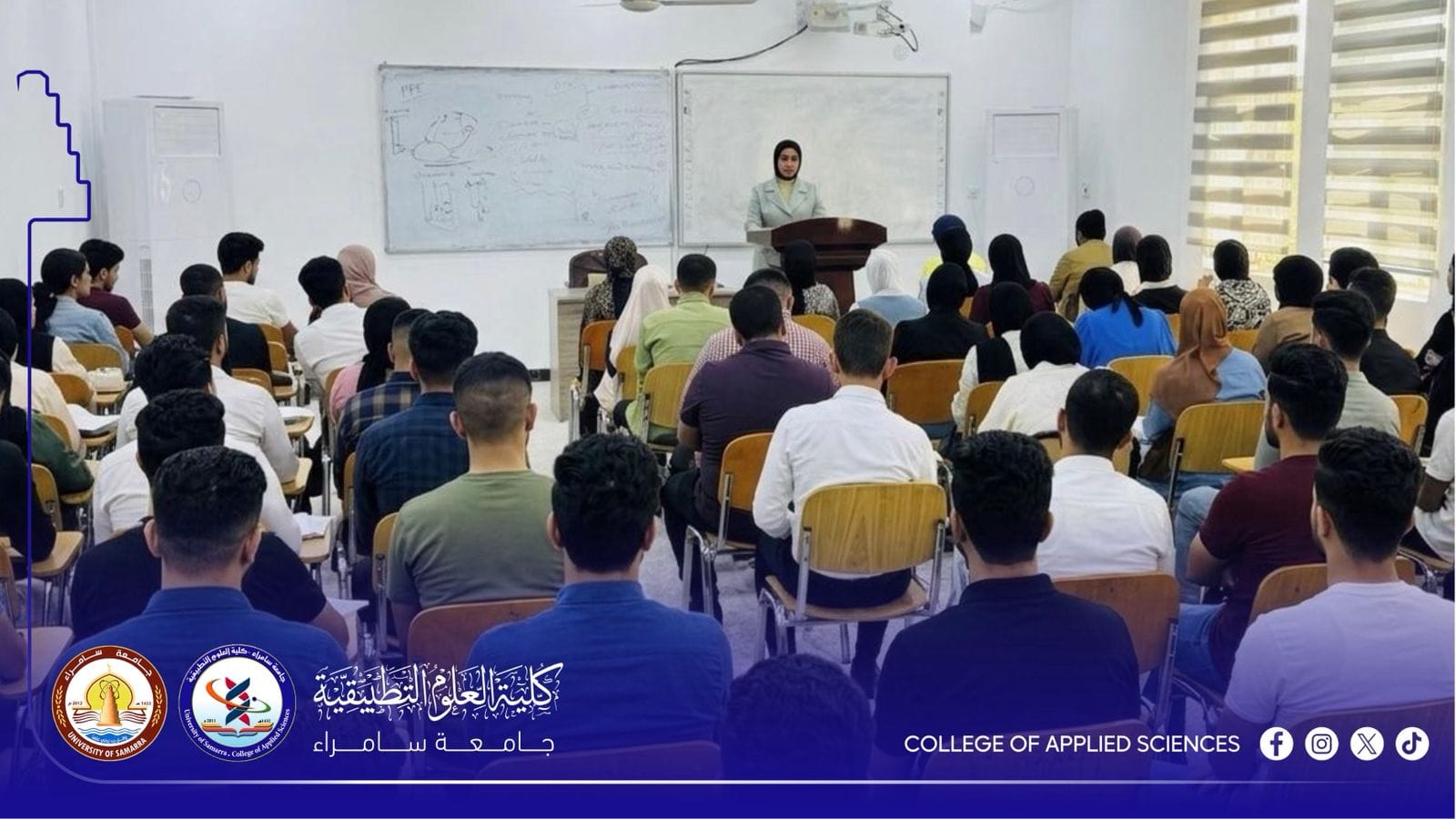
Women’s Affairs Unit organizes a training course at the College of Applied Sciences on Leadership Concepts and Styles
The Women’s Affairs Unit, in cooperation with the Departments of Pathological Analysis and Applied Chemistry at the College of Applied Sciences, University of Samarra, organized a training course titled “Leadership Concepts and Styles.” The course was delivered by Assistant Professor Dr. Omaida Ali Atiyah and Assistant Lecturer Amina Mohammed Jassim on Sunday and Monday, 12–13 April 2026.
The lecturers aimed to clarify the concept of leadership as a social influence process that seeks to unify individuals’ efforts toward achieving common goals, while highlighting the difference between a leader and a manager, and emphasizing that leadership is not linked to job position but rather to the ability to influence and drive change within the work environment.
The course also included an overview of various leadership styles, including autocratic leadership, which relies on individual decision-making and is used in emergency situations; democratic leadership, which involves team participation in decision-making and enhances cooperation; transformational leadership, which focuses on inspiration and improving performance; and delegative leadership, which grants full trust to staff to perform tasks independently.
In addition, the course addressed the essential skills required for a modern leader, including emotional intelligence in managing relationships, effective communication based on clarity and active listening, as well as risk management and decision-making in changing environments, along with integrity and role modeling as a foundation for a successful work environment.
The course concluded with a set of recommendations emphasizing the importance of continuous training to develop leadership skills, adopting situational leadership according to circumstances and staff competence, strengthening feedback and constructive criticism culture, and focusing on results while allowing space for creativity within the institution.