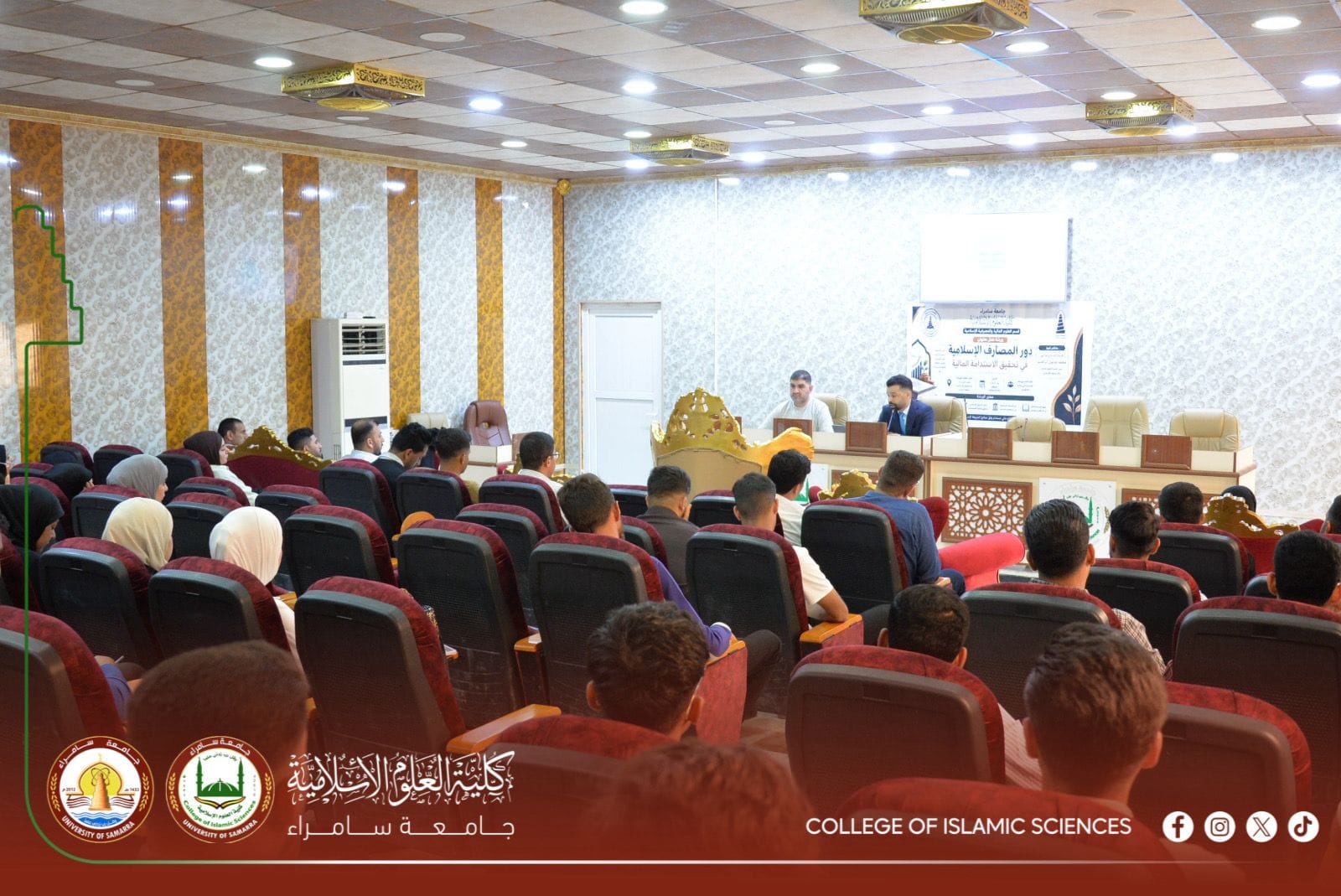
Workshop at the College of Islamic Sciences Discusses the Role of Islamic Banks in Achieving Financial Sustainability
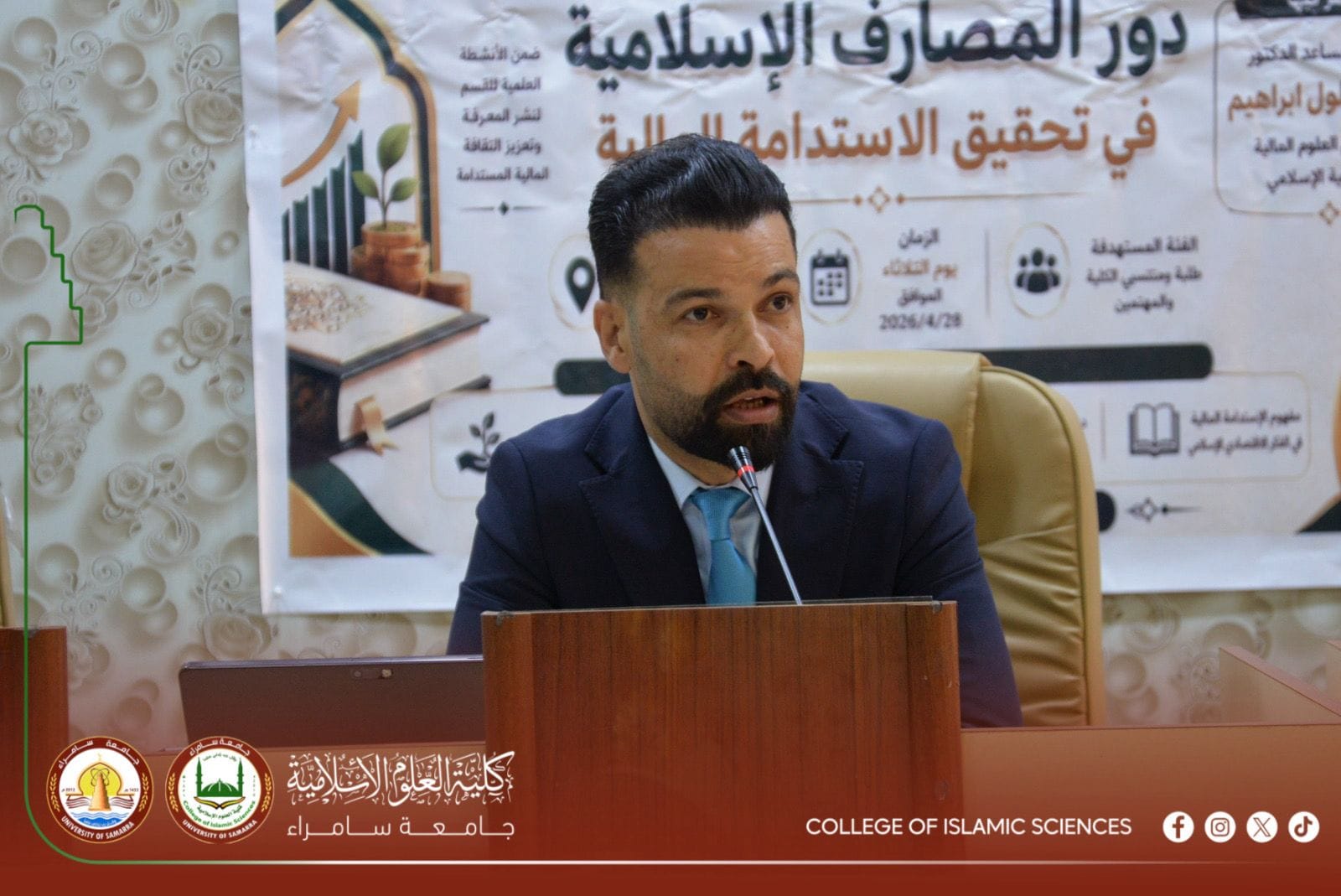
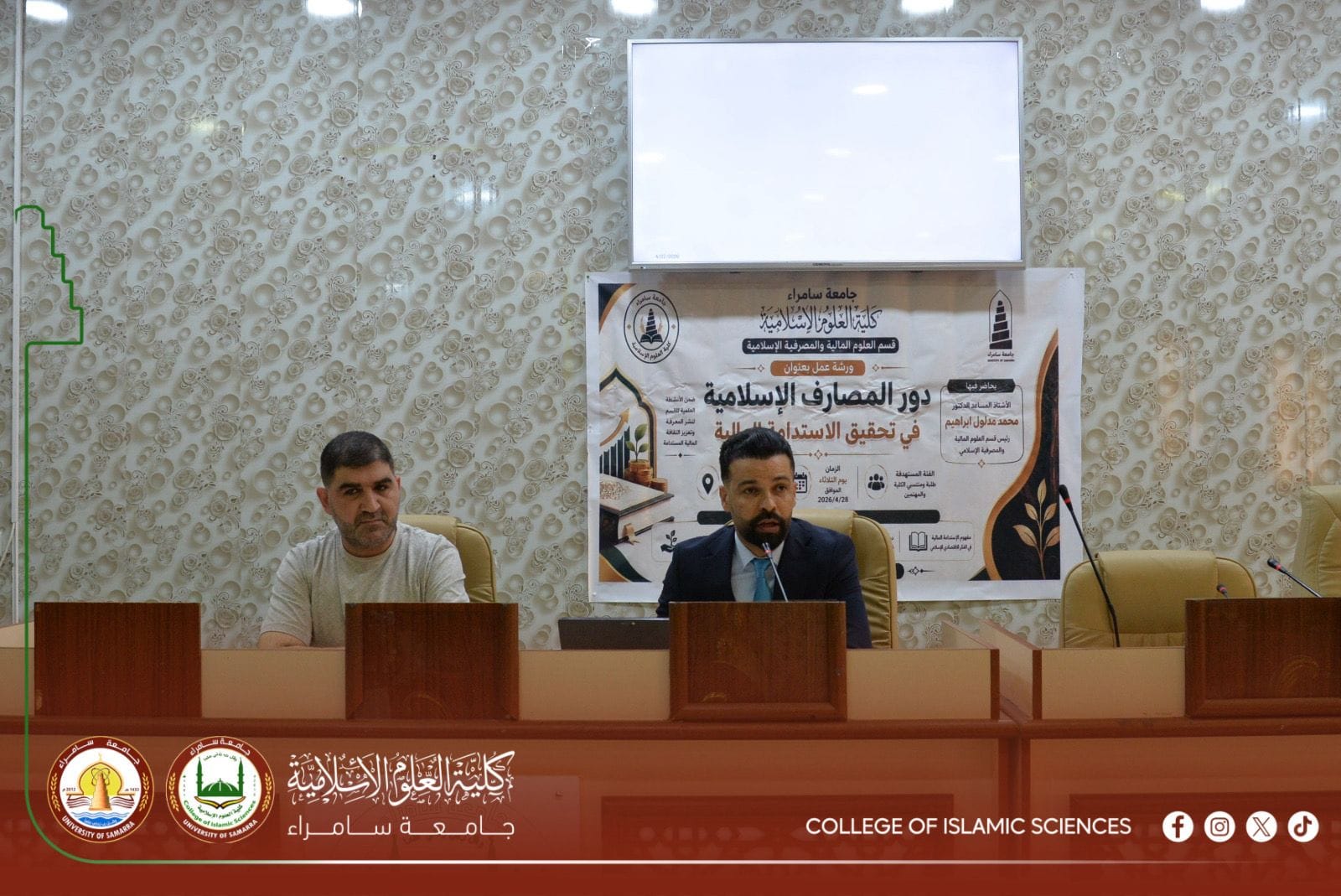
As part of enhancing academic awareness of contemporary financial issues and linking them to sustainability concepts, the Department of Islamic Finance and Banking at the College of Islamic Sciences, University of Samarra, organized a scientific workshop titled “The Role of Islamic Banks in Achieving Financial Sustainability,” attended by a number of faculty members, students, and those interested in financial and banking affairs. The workshop was delivered by Assistant Professor Dr. Mohammed Madlul Ibrahim.
The workshop addressed the growing position of Islamic banks within the banking sector, particularly in Iraq, in light of economic openness and the expansion of new investment fields. This has been accompanied by an increase in the number of Islamic banks and the diversification of their banking and financing services in accordance with Sharia regulations.
It also highlighted the role of these banks in achieving financial sustainability through the use of Sharia-compliant investment tools, ensuring the efficient allocation of internal and external resources in low-risk areas with stable returns. In addition, the workshop discussed the role of investment growth indicators in measuring the effectiveness of these institutions in achieving sustainable financial development.
Furthermore, the workshop examined the contribution of Islamic banks to meeting societal needs by providing interest-free banking services, enhancing trust in the Islamic financial sector, and supporting economic stability and sustainable development.
The workshop aimed to clarify the role of Islamic banks in supporting financial sustainability, introduce their investment and financing mechanisms, and highlight their contribution to economic growth in line with Islamic principles.