Master’s Thesis in Physical Education Examines Growth Mindset and Intellectual Egoism among First-Division Football Coaches
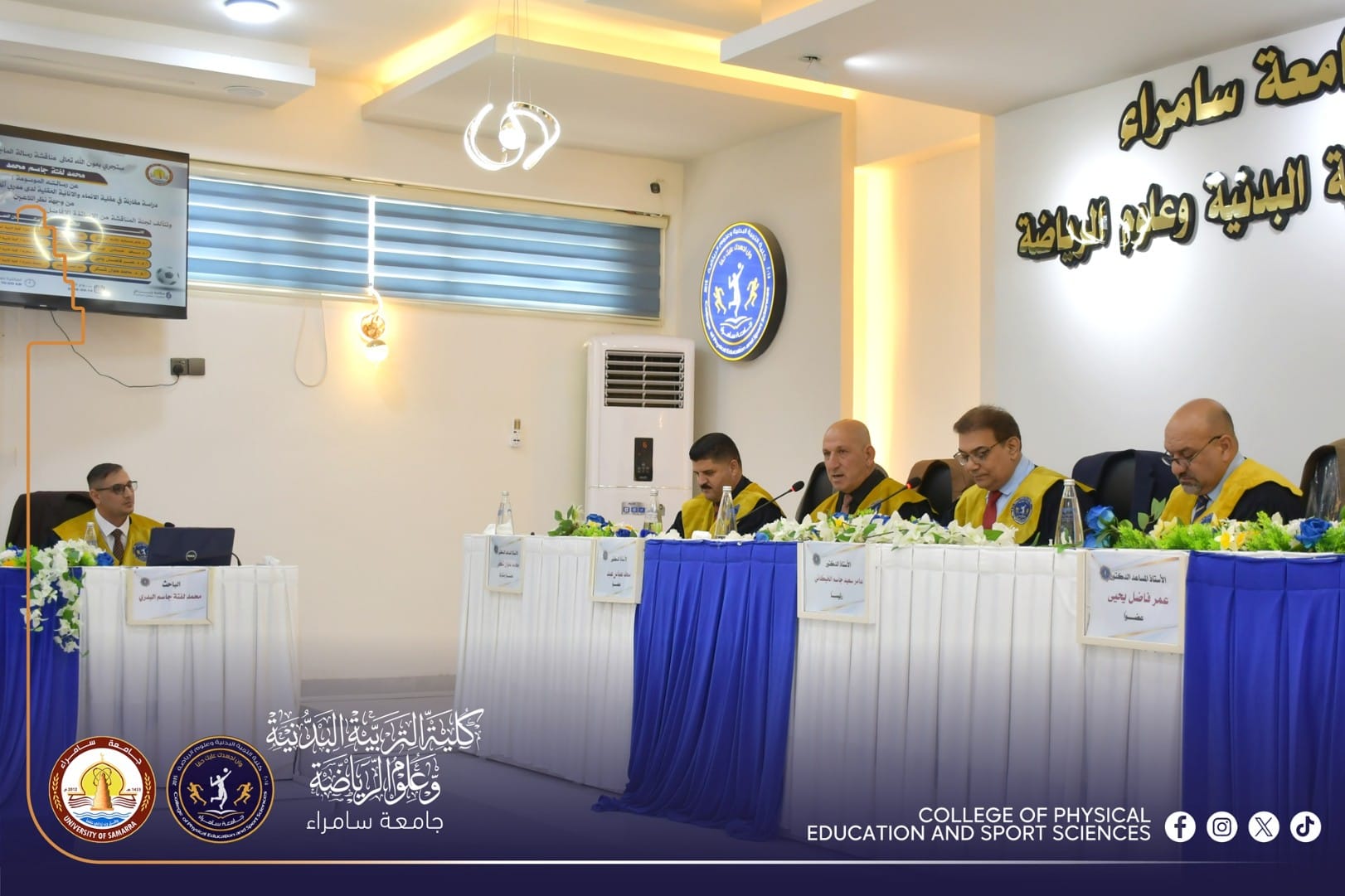
A master’s thesis was discussed at the College of Physical Education and Sports Sciences, University of Samarra, submitted by the student Mohammed Lafta, entitled:
“A Comparative Study of Growth Mindset and Intellectual Egoism among First-Division Football Club Coaches According to Regional Affiliation and Deliberate Educational Attainment.”
The study aimed to identify the level of growth mindset and intellectual egoism among first-division football club coaches from the players’ perspective. It also sought to investigate significant differences according to geographical region (Northern vs. Southern), educational attainment (Intermediate School and Below vs. Secondary School and Above), and age groups (15–24 years and 25–35 years).
The researcher adopted the descriptive method using a comparative approach, as it was deemed appropriate for the nature of the problem and the objectives of the study. The research population consisted of players from Iraqi First-Division Football League clubs during the 2025–2026 sports season, totaling 500 players distributed across the northern and southern groups according to the classifications of the Iraqi Football Association.
The findings highlighted the importance of fostering a growth mindset among coaches due to its positive impact on enhancing athletic performance. The results also emphasized the value of employing intellectual egoism in a balanced manner to support sound decision-making and achieve the best interests of both teams and players.
The thesis examination committee consisted of:
●Prof. Dr. Amer Saeed Jasim – University of Babylon (Chairman)
●Prof. Dr. Saad Abbas Abd – University of Samarra (Member)
●Asst. Prof. Dr. Omar Fadhel Yahya – University of Samarra (Member)
●Asst. Prof. Dr. Mohammed Alwan Shukr – University of Samarra (Member and Supervisor)
In conclusion, the study recommended that sports club administrations place greater emphasis on organizing training courses and developmental programs that enhance coaches’ psychological and cognitive competencies. It also stressed the importance of promoting awareness of modern concepts related to leadership and sports coaching, thereby contributing to improved performance levels and the achievement of team objectives