PhD Dissertation Discussed in the Department of Biology on Evaluating the Relationship Between Obesity and Certain Beneficial Bacteria
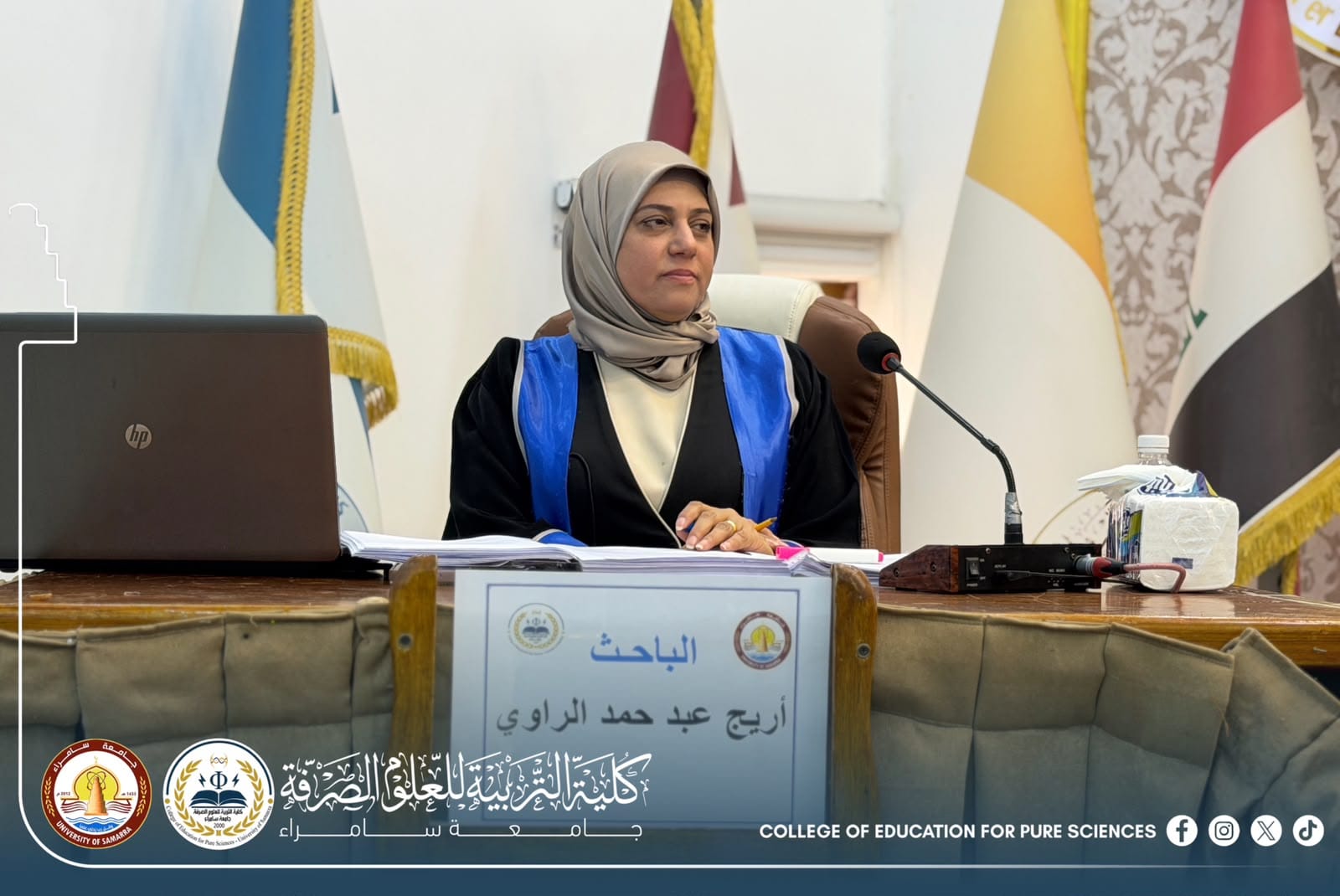
A PhD dissertation entitled “Evaluation of the Relationship Between Obesity and Certain Beneficial Bacteria in Baghdad City” was discussed in the Department of Biology, College of Education for Pure Sciences, University of Samarra. The dissertation was presented by researcher Areej Abdul Hamad.
The dissertation aimed to study and analyze the gut microbial composition, particularly Firmicutes and Bacteroidetes, and to determine the levels of short-chain fatty acids (SCFAs) in blood serum. It also investigated their role in protecting the intestinal barrier and regulating liver enzymes. In addition, the study measured the levels of adipokines and regulatory proteins (Leptin, Adipsin, and FGF-21), as well as the HMG-CoA enzyme, to identify the mechanisms of metabolic resistance and their association with obesity.
The findings revealed that obesity and diabetes mellitus are associated with significant disturbances in the balance of the gut microbiome, characterized by an increased abundance of Firmicutes and a decreased abundance of Bacteroidetes. This imbalance led to elevated levels of SCFAs, resulting in disruptions of metabolic processes related to fat storage and energy metabolism. Furthermore, the imbalance in short-chain fatty acids, together with the marked relative increase in acetic acid compared with the functional butyric acid, contributed to weakening the structural integrity of the intestinal lining. Consequently, this increased the permeability of bacterial endotoxins (LPS) into the bloodstream, thereby promoting inflammation and metabolic endotoxemia.