The Department of Geography Concludes Its Activities on Combating Violent Extremism with a Scientific Seminar
The Department of Geography at the College of Education for Human Sciences, University of Samarra, organized a scientific seminar entitled “Violent Extremism: An Intellectual Reading of Its Causes and Ways of Addressing It.” This event came in line with the directives of the Ministry of Higher Education and Scientific Research and within awareness programs aimed at promoting intellectual security and social peace.
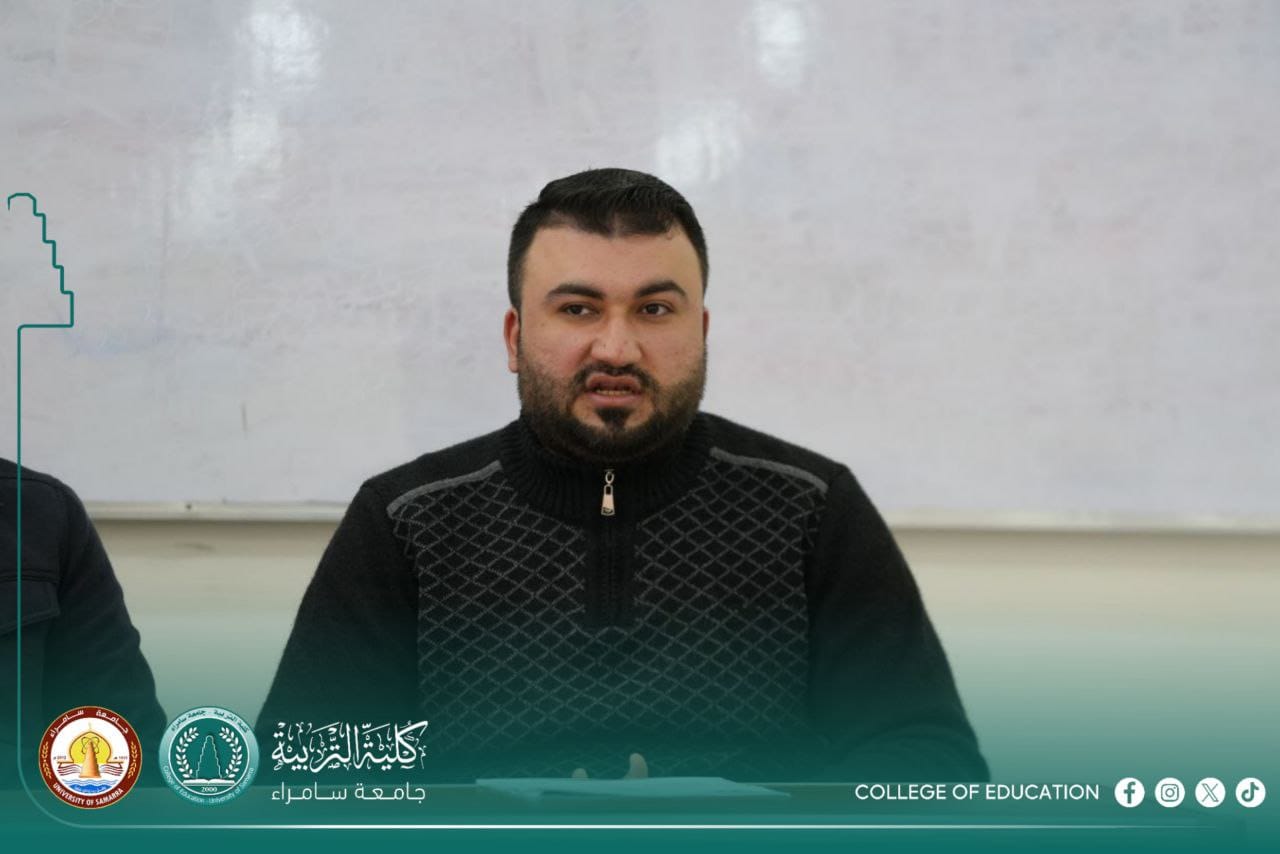
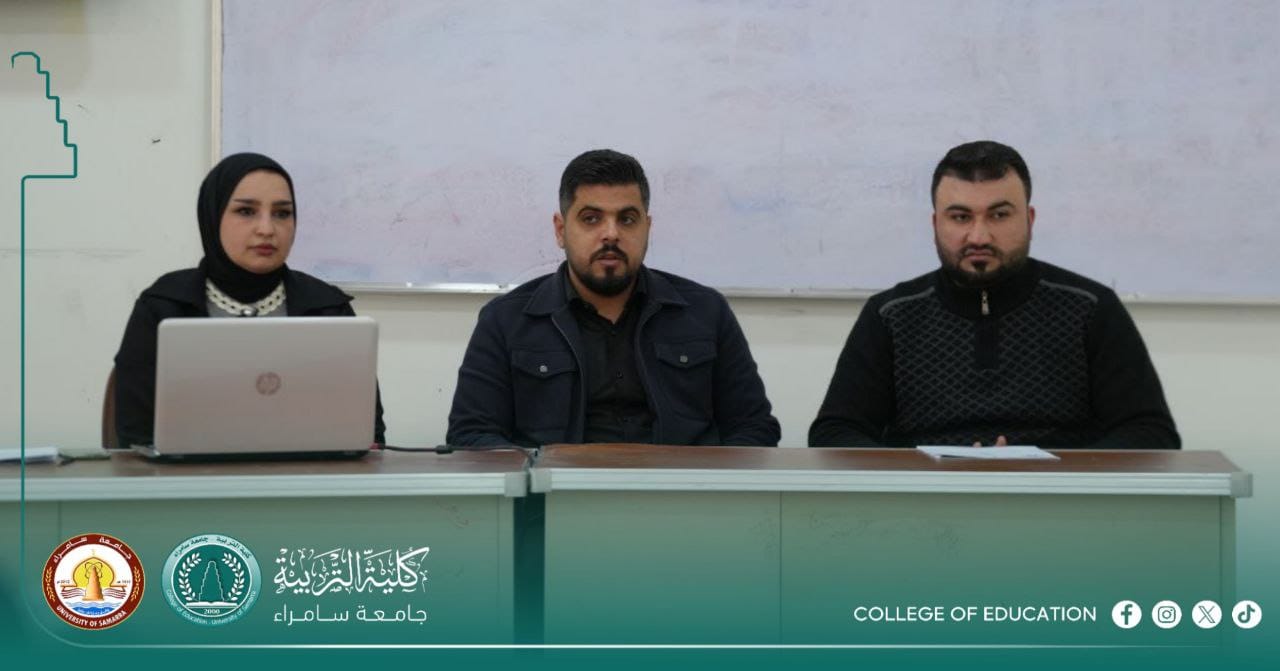
The seminar was delivered by Dr. Noor Al-Din Faisal Ibrahim, Dr. Mohammed Khalil Jasim, and Assistant Lecturer Hawraa Hamid Latif.
Dr. Ibrahim opened the seminar by defining extremism as one of the most serious challenges facing contemporary societies, as it poses a direct threat to security and stability. He emphasized that extremism is not limited to a single dimension, but rather represents an intellectual and behavioral condition resulting from the interaction of complex social, economic, psychological, and cultural factors.
In the same context, Dr. Jasim explained that the roots of extremism are linked to the absence of moderate understanding, the growth of feelings of exclusion and marginalization, and weak social justice. He also pointed to the misuse of religious and media discourse, as well as the exploitation of digital spaces and social media platforms to spread hate ideologies and intellectual recruitment, especially among young people.
For her part, Assistant Lecturer Latif stressed that violent extremism contributes to the fragmentation of the social fabric, undermines trust between individuals and institutions, and hinders paths of economic development, in addition to its negative impacts on national security and political stability.
The speakers unanimously agreed that confronting extremism cannot rely solely on security solutions, but rather requires a comprehensive strategy based on reforming education, promoting moderate religious discourse, fostering a culture of dialogue and acceptance of others, empowering youth economically and culturally, and activating the role of responsible media in raising awareness and countering misinformation.
At the conclusion of the seminar, participants presented a set of recommendations emphasizing that building a safe and balanced society begins with investing in human capital, strengthening the values of citizenship and moderation, and promoting joint action among state institutions, educational, religious, and media bodies, as well as civil society organizations, as the most effective path to preventing extremism and drying up its sources.