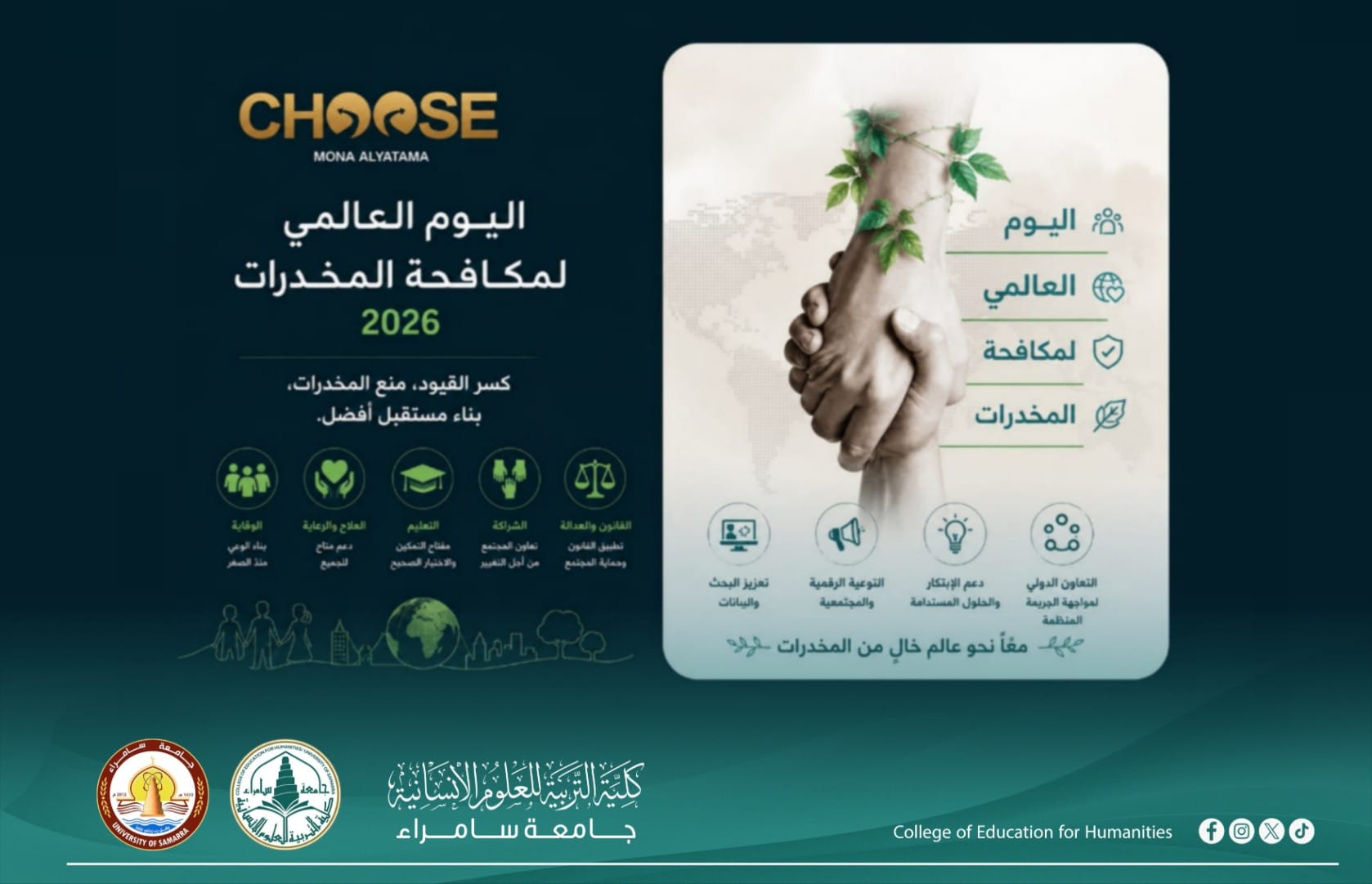
The Media and Government Communication Division Raises Awareness of the Risks of Drug Abuse on the Occasion of the International Day Against Drug Abuse and Illicit Trafficking
In line with the directives of the University of Samarra and the Ministry of Higher Education and Scientific Research aimed at enhancing community awareness and promoting a culture of prevention among young people, the Media and Government Communication Division at the College of Education for Human Sciences emphasized the importance of intensifying awareness efforts to combat the scourge of drugs, marking the International Day Against Drug Abuse and Illicit Trafficking.
The Division stated that the College Deanship places great importance on awareness programs and activities that contribute to protecting students from intellectual, behavioral, and health-related risks. This commitment stems from the College’s academic and social responsibility to prepare a conscious generation capable of confronting challenges that threaten the security and stability of society.
From this perspective, combating drugs represents a shared national and humanitarian responsibility that requires the concerted efforts of educational institutions, families, and media organizations. Such cooperation is essential for creating a safe university environment that supports students’ intellectual and behavioral development while protecting them from negative influences and harmful behaviors.
In this context, the College continues, through its academic departments and various units, to implement educational programs and awareness activities that highlight the health, psychological, and social consequences of drug abuse. These initiatives focus on the importance of early prevention, supporting community-based initiatives, and strengthening effective partnerships to reduce the spread of this phenomenon.
Furthermore, the Head of the Media and Government Communication Division affirmed that these efforts are consistent with global initiatives that call for raising public awareness, supporting treatment and rehabilitation programs, encouraging scientific research, and expanding institutional cooperation to address drug-related challenges, thereby contributing to the development of a safer and more informed society.
In conclusion, and in recognition of the educational role played by academic institutions, the Division stressed that investing in awareness and knowledge constitutes the fundamental pillar of drug prevention and control. Universities, therefore, play a pivotal role in preparing generations capable of making sound decisions and contributing to the building of a society free from this menace.