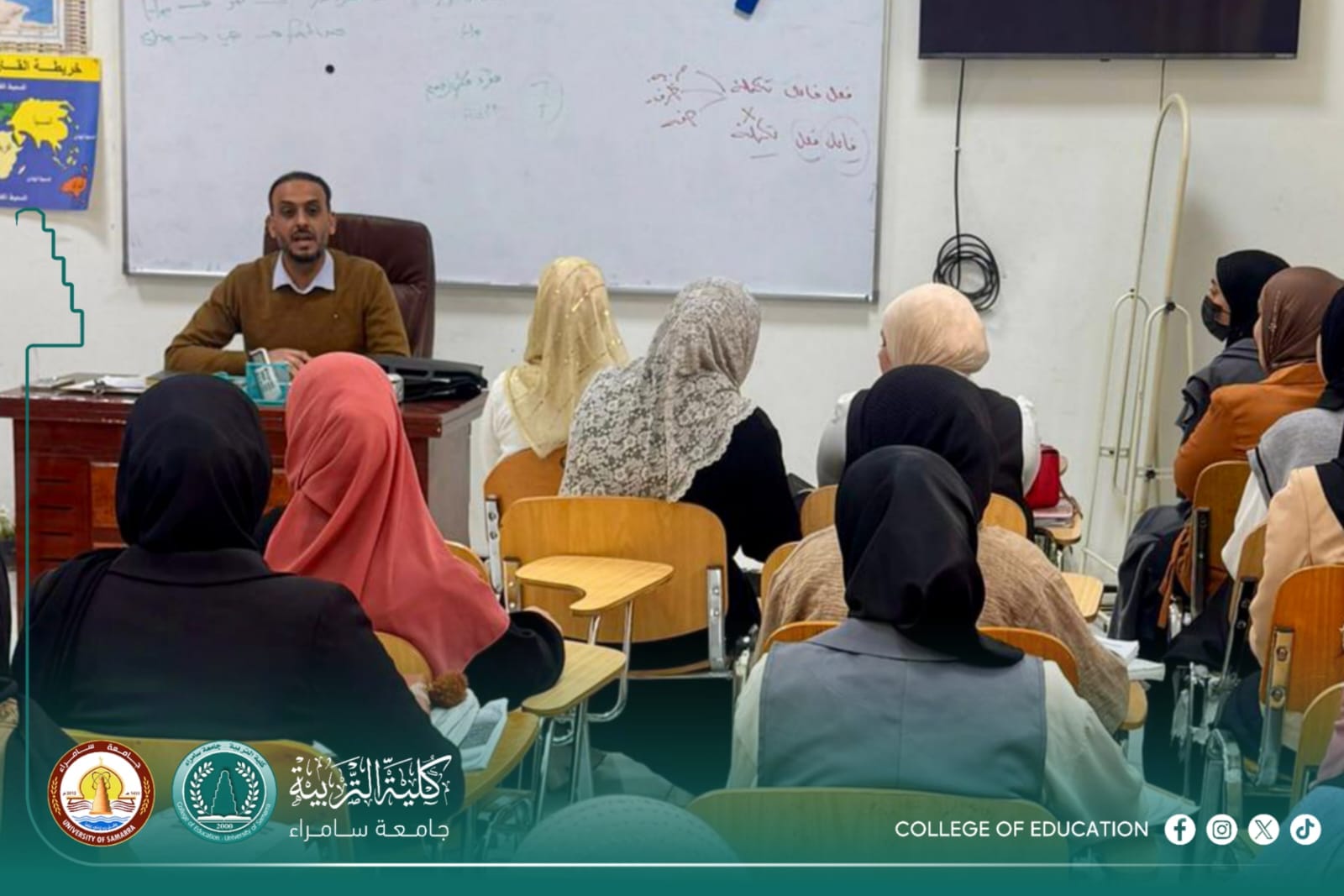
The Women’s Affairs Unit, in cooperation with the Department of Geography, organized a training course on the role of female students in building a safe environment
The Women’s Affairs Unit, in cooperation with the Department of Geography at the College of Education for Humanities – University of Samarra, organized a training course entitled “The Role of Female Students in Building a Safe Environment: Psychological and Societal Well-being.” The course was delivered by Assistant Lecturer Haider Basim Farhan, alongside Assistant Lecturer Rasha Raad Abdullah and Assistant Lecturer Rana Abdul Samad.
On the first day, the lecturers reviewed the most prominent psychological and social challenges facing female university students, highlighting the student’s role as an active contributor to establishing a safe university environment that promotes psychological and social well-being. The university was described as a microcosm of society, reflecting the awareness and behavior of its members, which gives female students an influential role in spreading positivity and strengthening cohesion within the campus.
On the second day, the course continued by emphasizing the importance of achieving a balance between academic requirements and personal life, as well as adopting healthy methods for managing academic stress and anxiety. It also highlighted the importance of mutual psychological support among peers to enhance a sense of belonging, along with the need to benefit from academic and psychological counseling services when necessary.
The focus further extended to the role of female students within the university environment by contributing to the establishment of a culture based on respect and acceptance of diverse opinions, as well as supporting fellow students—especially during exam periods—while raising awareness about mental health and using social media positively to build a supportive digital community.
In a broader context, the lecturers concluded by emphasizing the importance of promoting social peace within the university through fostering cooperation, teamwork, and active participation in student activities and clubs. They also stressed the importance of respecting cultural and intellectual diversity, as well as adopting awareness initiatives, including anti-bullying campaigns and mental health support, to help build a more harmonious and stable university environment.