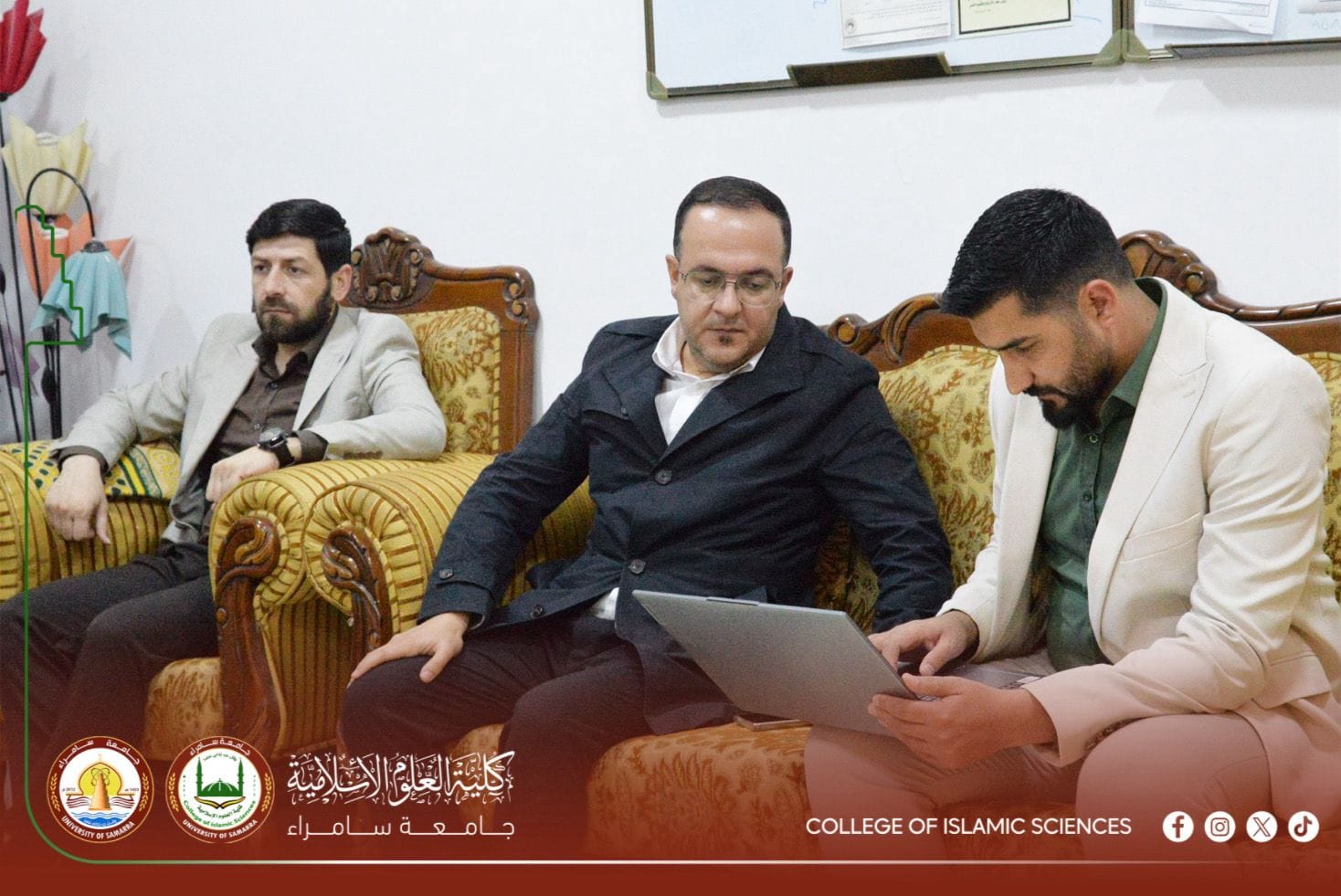
College of Islamic Sciences Hosts University Follow-Up Committee for Digital Transformation Programs and Addresses Implementation Challenges
As part of its ongoing efforts to keep pace with the requirements of digital transformation adopted by the Ministry of Higher Education and Scientific Research, the College of Islamic Sciences hosted the University Follow-Up Committee responsible for data entry of the programs (IQ Learn), (SIS), and (HEPIQ). These systems are among the modern platforms used for electronically managing academic and administrative processes, contributing to improving academic performance efficiency and enhancing the quality of education.
The committee included Assistant Professor Khalid Saeed Latif, Lecturer Raed Ashraf Kamilah, and Assistant Lecturer Ahmed Yassin Mohammed. They met with the Assistant Dean for Scientific Affairs, Professor Dr. Yasser Adnan Hassan, in the presence of the heads of scientific departments in the college.
During the meeting, the current status of work on these electronic systems was reviewed, and a field assessment was conducted to identify the main challenges and obstacles hindering data entry completion and program implementation—particularly issues related to system integration and accelerating technical procedures. These systems represent a fundamental component of the Smart University project, which aims to manage academic data accurately and efficiently.
In collaboration with the college administration, the committee reached a set of prompt solutions and treatments based on specific organizational and technical mechanisms, which would facilitate workflow and ensure the timely completion of program requirements.
At the conclusion of the visit, the Dean of the College, Professor Dr. Hassan Ahmed Hussein, praised the efforts of the committee, commending their continuous follow-up and dedication to the success of digital transformation projects. He presented letters of appreciation to the committee members in recognition of their efforts and fruitful cooperation with the college.
This activity aligns with the college’s direction toward strengthening the digital academic environment and enhancing the level of educational and administrative services in line with modern developments in higher education.