
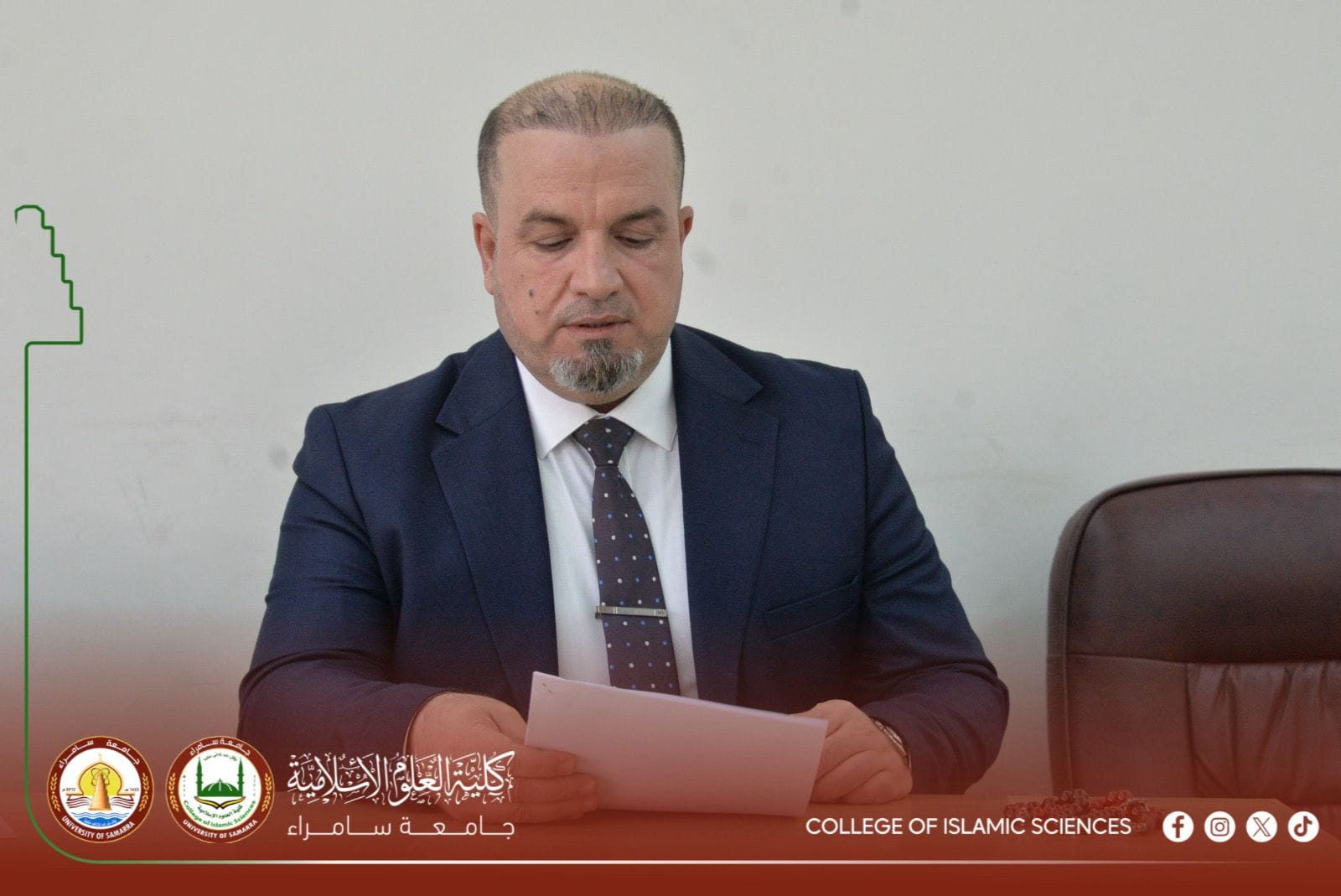
Training Course at the College of Islamic Sciences on Contemporary Applications of the Jurisprudence of Necessities and Needs
Under the patronage of the Deanship of the College of Islamic Sciences at the University of Samarra, a training course titled “Contemporary Applications of the Jurisprudence of Necessities and Needs” was organized, addressing the importance of the jurisprudence of necessities and needs as one of the most prominent branches of Maqasid-based jurisprudence that reflects the tolerance and flexibility of Islamic Sharia in keeping pace with contemporary developments. The course was presented by Assistant Professor Dr. Ahmed Wisam Al-Din Qawam and Assistant Lecturer Mona Hamid Mohammed.
The course explained that Islamic Sharia was established to achieve people’s interests and preserve the five essential necessities: religion, life, intellect, wealth, and honor. It emphasized that Islamic rulings were not built upon hardship and restriction, but rather upon ease and the removal of difficulty in a manner that achieves mercy, justice, and public welfare.
The course highlighted contemporary applications of the jurisprudence of necessities and needs in medical, economic, technological, and social fields, stressing the need for sound scholarly understanding in applying jurisprudential principles to contemporary issues according to legitimate and Maqasid-based regulations, بعيدًا عن الإفراط أو التفريط.
In its concluding recommendations, the course emphasized the necessity of keeping the concept of necessity subject to sound Islamic scholarship and precise Maqasid regulations in order to preserve the constants of Sharia and ensure its proper application to emerging realities.
The course concluded by affirming that the greatness of Islamic Sharia lies not only in the firmness of its principles, but also in its ability to accommodate the changes of human life within a framework that achieves mercy, justice, and public welfare, which is clearly manifested in the jurisprudence of necessities and needs and its contemporary applications.

