
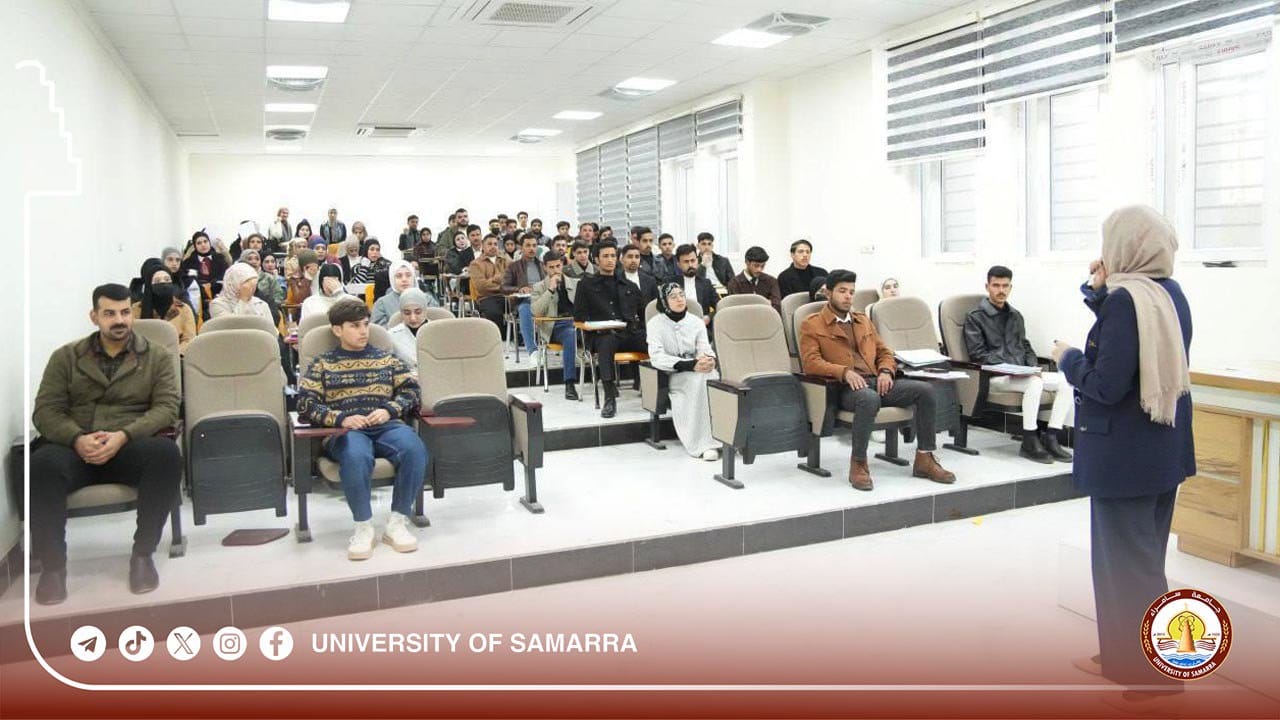
Training Course at the College of Education for Pure Sciences Highlights the Role of Cholesterol in the Body
The Department of Chemistry at the College of Education for Pure Sciences, University of Samarra, organized a training course titled “The Role of Cholesterol in the Body and the Risks of Its Elevation.”
The course was presented by a group of faculty members from the department to raise awareness among chemistry students.
The organizers sought to define cholesterol as an essential and vital waxy, fatty substance for the human body, mostly produced in the liver, and its significant role in many vital biological functions.
The lectures explained the types of cholesterol in the blood, including, Low-Density Lipoprotein (LDL): Which carries cholesterol from the liver to the body’s tissues and cells that need it. Its accumulation increases on arterial walls, leading to atherosclerosis and increasing the risk of heart attacks and strokes, High-Density Lipoprotein (HDL) Which helps remove excess cholesterol from the arteries and tissues, returning it to the liver for elimination from the body.
On the other hand, the chemistry faculty members demonstrated the role of cholesterol in the body, as it helps in building body membranes by composing all cell membranes, which helps maintain their structure and fluidity. Furthermore, it is essential for the production of hormones and the synthesis of Vitamin D through the body’s exposure to sunlight.
In the same context, the course concluded by stating the risks of high cholesterol and the serious diseases it causes, such as narrowing and blockage of arteries, coronary heart disease, stroke, and peripheral artery disease.


