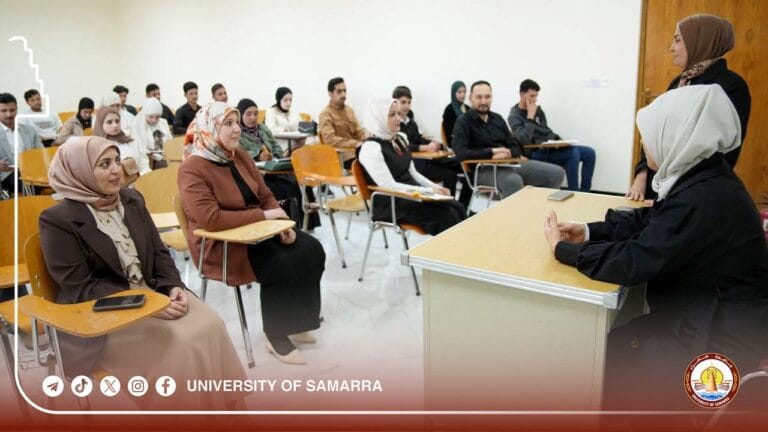
A Master’s thesis at the University of Samarra discusses an epidemiological and molecular study of Entamoeba histolytica
A Master’s thesis in the College of Applied Sciences at the University of Samarra, titled “An Epidemiological and Molecular Study of Entamoeba histolytica in Al-Shirqat District,” was presented by the student Sadiq Omar Khattab.
The student aimed, in his thesis, to examine the impact of various factors on the prevalence of infection with the Entamoeba histolytica parasite in Al-Shirqat District. These factors included age group, place of residence, water source, among others. Additionally, the study involved the isolation of the Entamoeba histolytica parasite from infected patients and its molecular identification using the PCR technique.
The results of the study revealed that the highest infection rate was observed in the 1-10 years age group, reaching 87.5%, with a higher prevalence in males compared to females. Furthermore, the study found that illiterate mothers represented the highest infection rate at 34.6%, while the lowest infection rate was observed in mothers who had completed university education, at 0.00%. The study also indicated that the highest infection rate was among individuals relying on river water, at 15.19%, and that the infection rate in rural residents was 34.11%, higher than the infection rate in urban residents, which stood at 1.97%.