College of Islamic Sciences Organizes a Scientific Session on \”Quranic Discourse and its Impact on Shaping National Culture\”
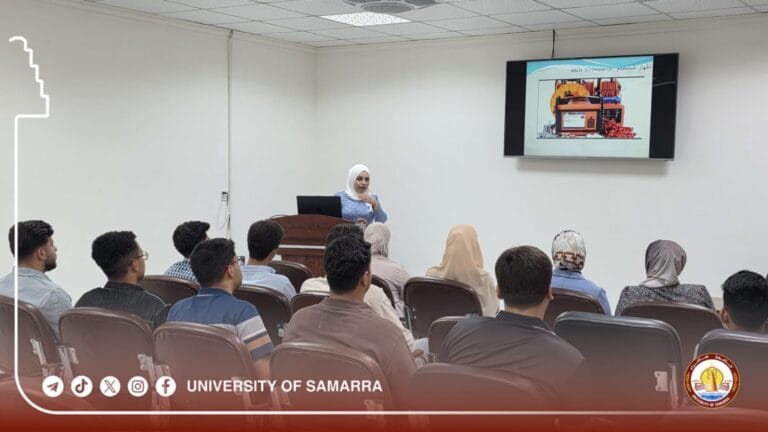
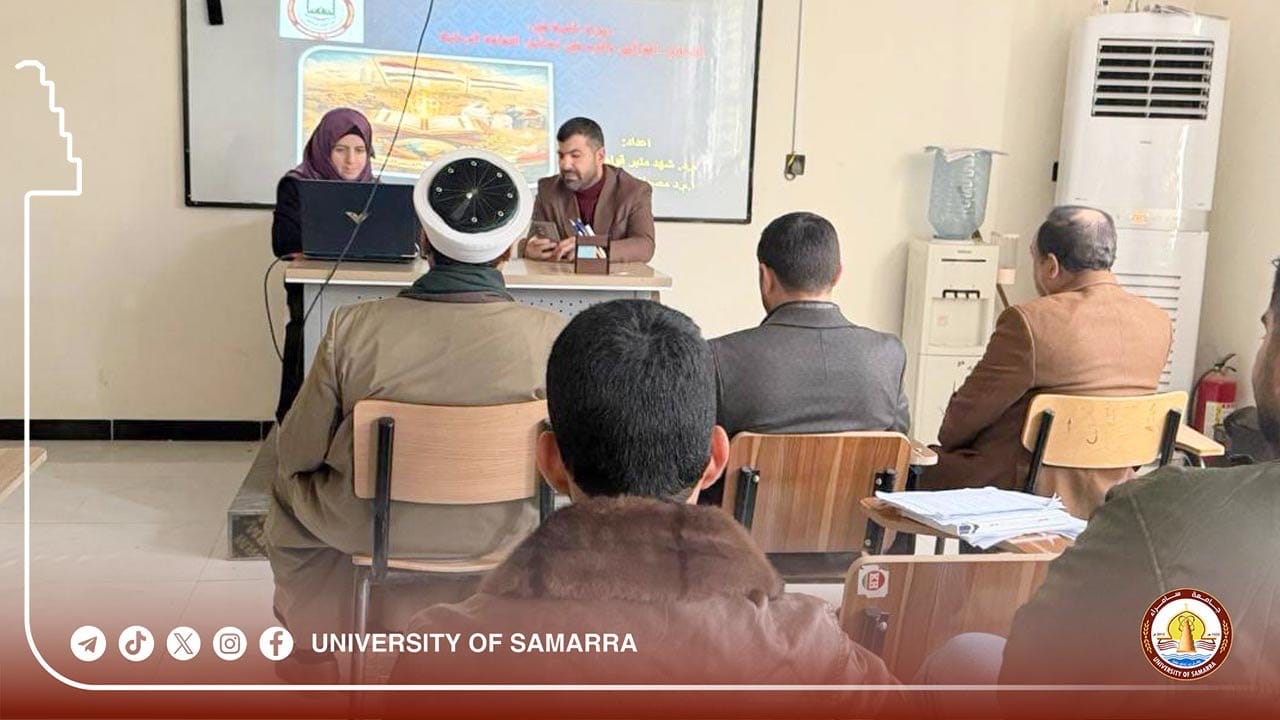
The Department of Creed and Islamic Thought at the College of Islamic Sciences, University of Samarra, organized a scientific session titled “Quranic Discourse and its Impact on Shaping National Culture.” The session was presented by Assoc. Prof. Dr. Mustafa Khalid Jihad and Dr. Shahad Munir Qawam al-Din.
The organizers aimed to highlight the pivotal role of Quranic discourse in building national culture and consolidating university values that preserve social identity and support unity and stability. This is particularly significant as the Holy Quran is the primary source of the moral and human value system that contributes to shaping the collective consciousness of the nation and guiding individual and group behavior.
The session focused on
The Concept of Quranic Discourse, Defining it as a comprehensive divine discourse that addresses humans across various doctrinal, intellectual, moral, and social dimensions.
It establishes a culture based on faith, justice, human dignity, peaceful coexistence, and respect for diversity Highlighting the Quran’s unique ability to deeply influence souls and cultivate rational cultural awareness and Strengthening National
Belonging Dr. Mustafa emphasized the impact of Quranic discourse in promoting values of good citizenship, maintaining public order, rejecting strife, and consolidating the spirit of shared responsibility for the public good.
The session addressed how the Holy Quran contributes to a cohesive national culture based on moderation, rejecting exaggeration, extremism, and violence, while advocating for dialogue and understanding between different segments of society.
Dr.Shahad discussed the role of educational, missionary, and media institutions in activating Quranic discourse through a contemporary approach that keeps pace with current cultural and intellectual challenges.
She emphasized The importance of a purposive understanding of the Quranic text, linking it to social reality and needs, The necessity of rehabilitating religious discourse to serve as a tool for reform and construction, Protecting national identity from attempts at distortion or cultural alienation.
The session concluded that Quranic discourse constitutes a fundamental pillar in forming an aware national culture. Due to its sublime human values and firm moral principles, it is capable of building virtuous individuals and responsible citizens, enhancing social peace, and achieving a balance between religious authenticity and the requirements of contemporary life.