
Samarra University Colleges Organize Campaigns on Green Education and Sustainable Environment
The Women’s Affairs Units at the colleges of Samarra University organized awareness campaigns and educational seminars on the concept of green education and sustainable environment, in line with a directive from the Office of the Minister of Higher Education and Scientific Research on August 5, 2024, calling for the implementation of the National Strategy for Iraqi Women, specifically addressing the theme of “Enhancing the Role of Women in Managing Climate Change Risks and Protecting the Environment.”
The activities aimed to highlight the concept of green education, which integrates environmental awareness and sustainable development, in addition to raising students’ environmental awareness and improving their mental and social skills through environmental consciousness. It also clarified ways to provide a healthy environmental life for humans and how to maintain it.
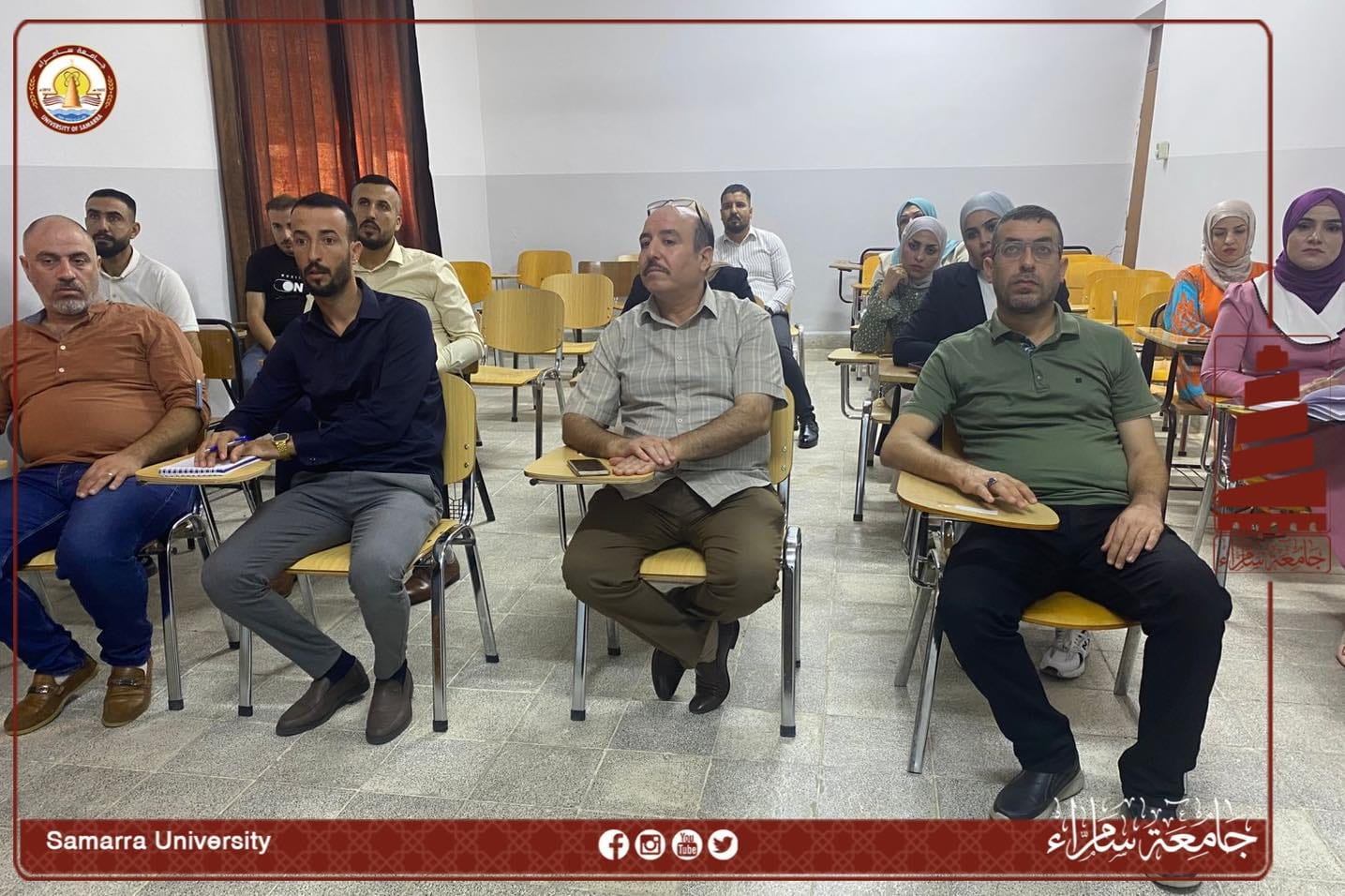
The College of Arts organized an awareness seminar titled “Education Towards Green and Clean Sustainability,” which focused on training youth to identify environmental problems and find solutions through various curricula and educational programs.
Meanwhile, the College of Education emphasized the importance of environmental sustainability and its outcomes, such as conserving natural resources and avoiding waste, as well as reducing pollution from factories and vehicle emissions, in a seminar titled “The Concept of Environmental Sustainability.”
The College of Agriculture conducted a workshop on “Environmental and Climatic Risks,” covering issues like rising sea levels, melting ice, and geological factors such as earthquakes and volcanoes. It also addressed industrial aspects, including factories and their waste, which negatively affect the environment.
In the same context, the College of Agriculture also organized tree-planting campaigns in the college gardens, aiming to increase green spaces and preserve the green environment’s sustainability within the college.
Lecturers in all these activities encouraged researchers to write studies on sustainable development and organized awareness and educational campaigns to increase green spaces in both governmental and non-governmental institutions, homes, and streets. They also promoted recycling of solid and consumable materials to protect the environment.


