
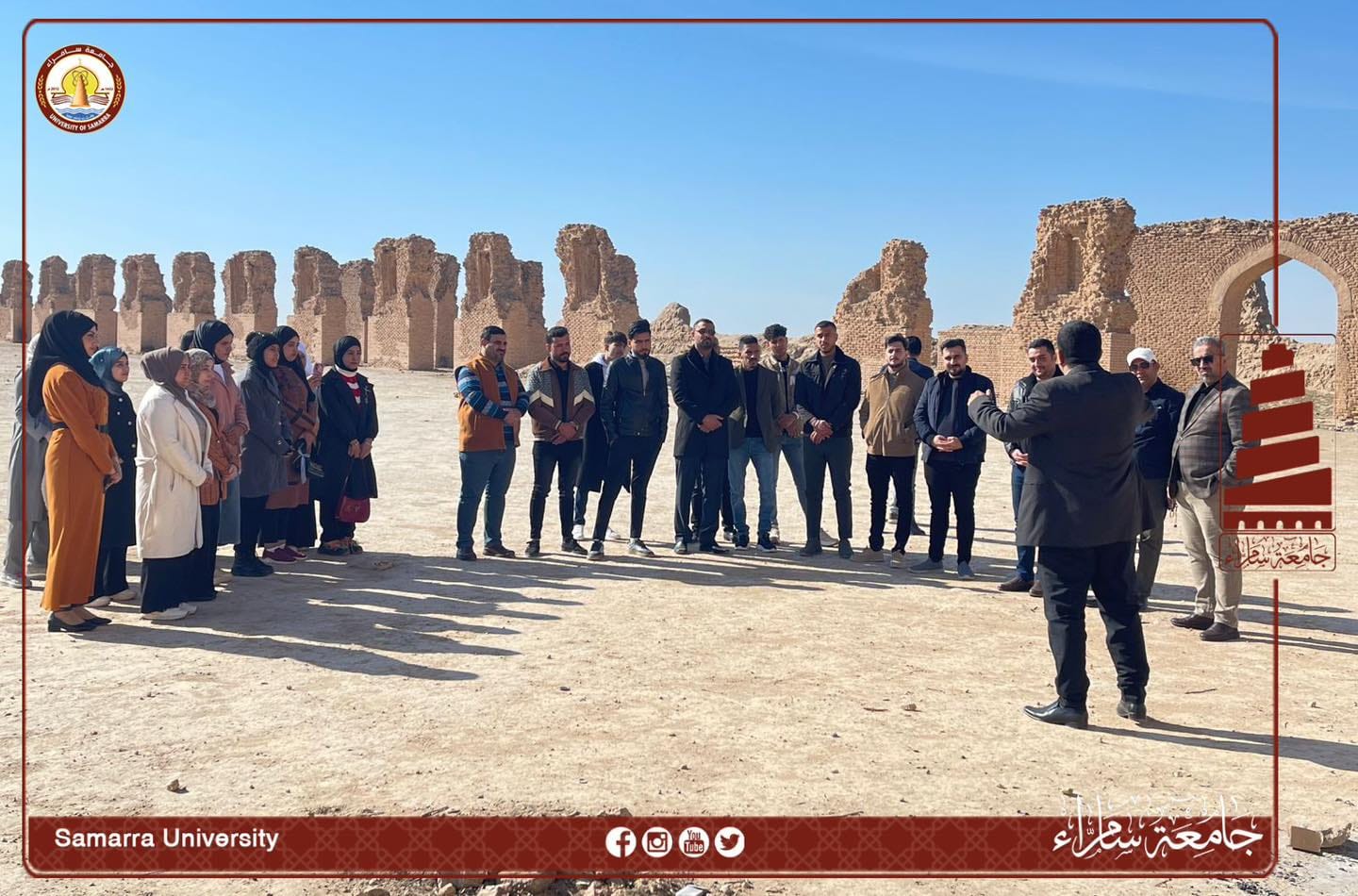
A Lecture for Students of the Department of Archaeology at the “Spiral Minaret of Abu Dulaf,” Hosting a Delegation from Lithuania
The Department of Archaeology at the College of Arts, University of Samarra, organized a scientific field visit to the congregational mosque in the city of Al-Mutawakkiliya, also known as the “Mosque of Abu Dulaf.” The visit was led by Assistant Professor Dr. Ghassan Ali Mustafa, Assistant Professor Dr. Maher Hassan Mohammed, Lecturer Moaz Mustafa Ahmed, and Lecturer Haroon Rashid Hamid, all faculty members in the department.
Drs. Ali and Hassan highlighted the historical aspects of the mosque and its architectural features, which distinguished the Abbasid state from others at the time. They also discussed its geographic location, approximately 20 kilometers north of the Samarra district, situated in the heart of Al-Mutawakkiliya city, which was built by the order of Caliph Al-Mutawakkil in 245 AH, covering an area of 46,000 square meters.
Meanwhile, Drs. Hamid and Ahmed explained the construction methods of the mosque’s towers, its standing walls, entrances and exits, the placement of the mihrab, and the reasons behind the choice of construction methods for each. They also discussed the current condition of the mosque and the climatic factors that have caused significant damage to large parts of its structure.
The site also welcomed a tourist delegation from Lithuania, who were received by the faculty and students of the Department of Archaeology. They guided the visitors on an archaeological tour, introducing them to the history of Al-Mutawakkiliya city and the historical significance of the “Spiral Minaret of Abu Dulaf.” They emphasized its importance today due to its intact structure and its status as an architectural marvel that could rival the Spiral Minaret of Samarra.


