Celebrating International Mother Language Day: Samarra University Hosts a Central Ceremony Attended by the President of the Iraqi Scientific Academy
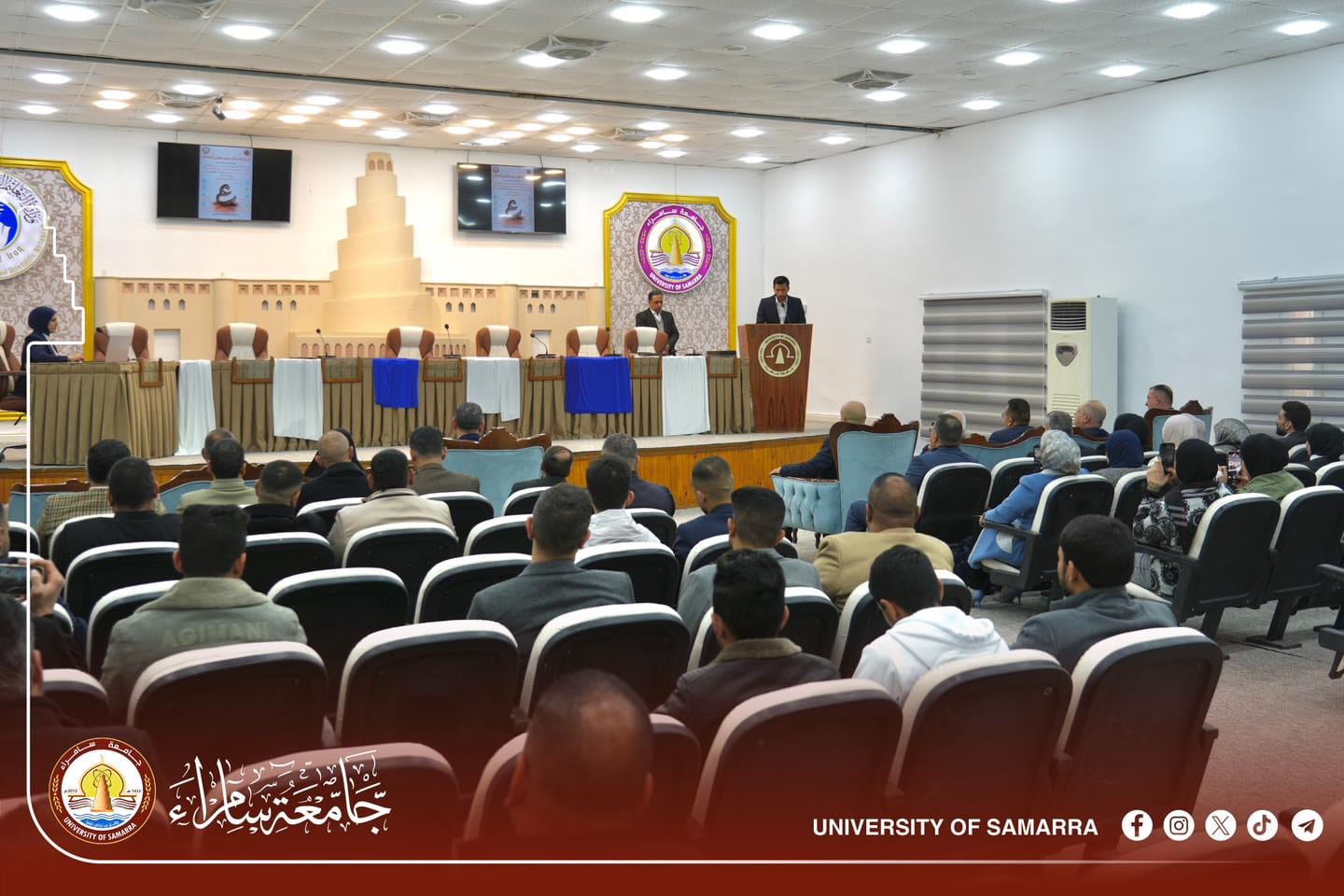
Samarra University organized a central ceremony in honor of International Mother Language Day, hosted by the Arabic Language Department at the College of Education. The event carried the slogan “Arabic: Our Eternal Mother” and welcomed the esteemed presence of Dr. Mohammed Hussein Al-Yassin, President of the Iraqi Scientific Academy.
The ceremony commenced with a recitation from the Holy Quran, followed by the national anthem and a moment of silence with the recitation of Surat Al-Fatiha to honor the martyrs of Iraq and the Arab and Islamic nations.
The event continued with a speech by Dr. Al-Yassin, in which he urged a return to the language of the Quran and the abandonment of foreign words to preserve the identity of Arabic as a mother language—one that remains inexhaustible in words and meanings. He praised the university’s efforts in strengthening the Arabic language.
In his address, Professor Dr. Ahmed Hashem Ahmed, representing the Arabic Language Department, expressed pride in the mother tongue and highlighted the department’s continuous efforts in refining and mastering it, both by faculty members and students.
Additionally, Dr. Mohammed Hussein Ali from the University of Karbala delivered remarks on the significance of the Arabic language, advising on ways to protect it from distortion and degradation through the misuse of terms.
The event also featured poetic recitations celebrating the beauty and richness of the Arabic language. These eloquent and rhythmic verses were composed and recited by Arabic scholars from Samarra University.
Notably, Professor Dr. Ahmed Hussein Ali, who had been delegated on February 6th, played a key role in extending the invitation to Dr. Al-Yassin for his participation in the university’s event in collaboration with the Iraqi Scientific Academy.
It is worth mentioning that International Mother Language Day aims to promote sustainable development through knowledge transmission and the preservation of cultural heritage by safeguarding native languages.