College of Education for Sciences Humanities Discusses the Impact of Atmospheric Depressions and Water Resources on Iraqi Agricultural Production
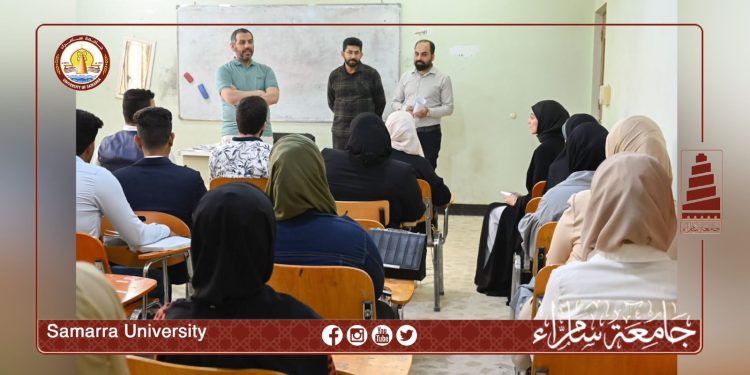
The Department of Geography at the College of Education for Human Sciences, University of Samarra, held a scientific seminar titled “Atmospheric Depressions and Water Resources in Iraq and Their Impact on Agricultural Production.”
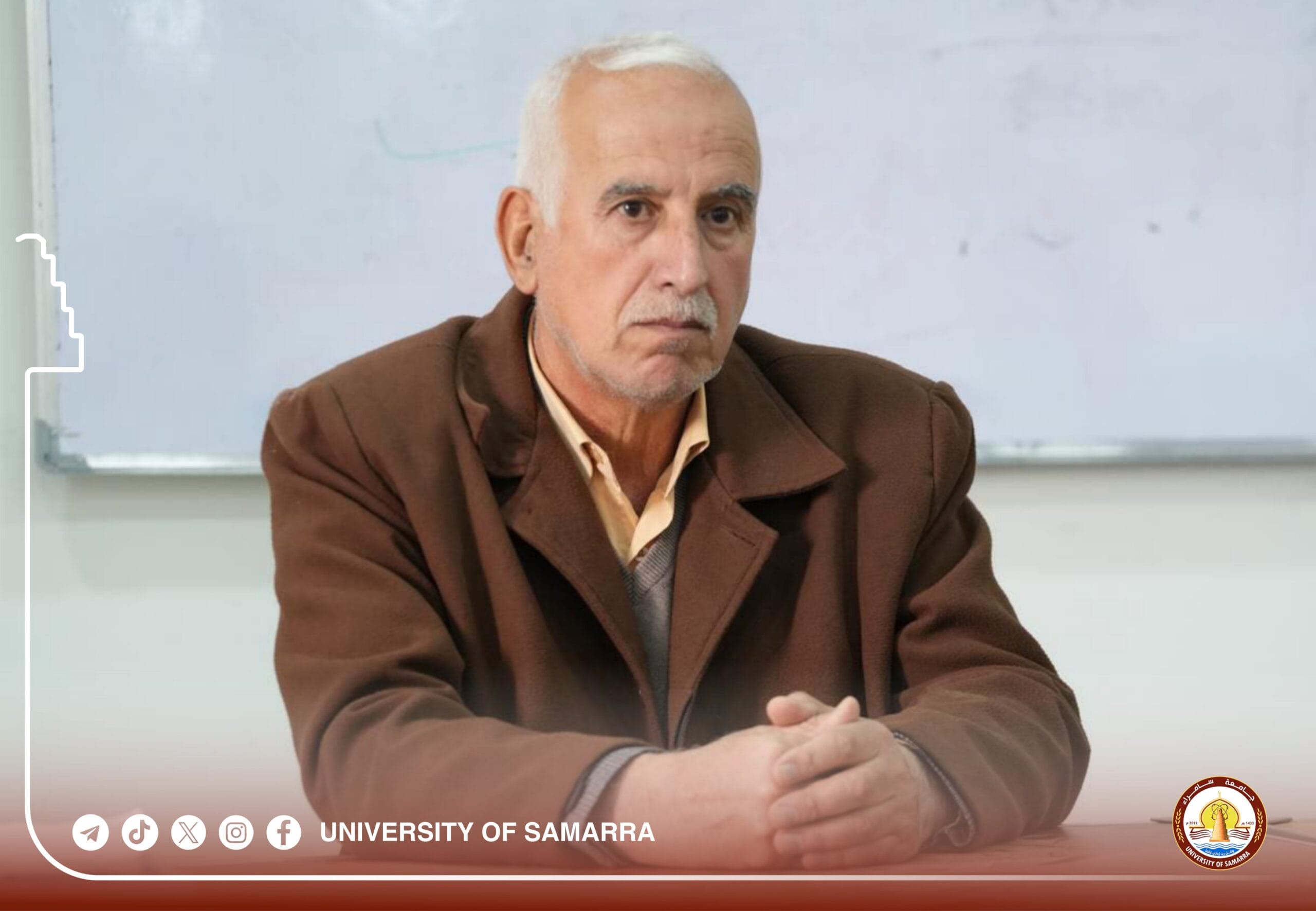
The seminar was presented by Prof. Dr. Hussein Alwan Ibrahim and Prof. Dr. Abdul-Karim Rashid Abd al-Latif.
Dr. Hussein explained the role of atmospheric depressions in shaping the rainfall system in Iraq, focusing on Mediterranean and Sudanese depressions as the primary sources of seasonal rainfall.
He highlighted their role in recharging surface and groundwater resources, as well as the temporal and spatial variations in precipitation amounts associated with them.
For his part, Dr. Abdul-Karim illustrated the repercussions of climatic variation on the agricultural sector. He explained how the succession of wet and dry years determines the amount of water available for farming. He also discussed the impact of the intensity and frequency of atmospheric depressions on the occurrence of drought waves or flash floods, and the subsequent challenges posed to water resource management and the protection of agricultural lands.
In a related context, the seminar focused on the direct correlation between the regularity of atmospheric depressions and the improvement of agricultural production. It noted how regular depressions lead to increased cultivated areas and higher crop yields—particularly grains—whereas production declines when these depressions are weak or irregular.
The seminar concluded with several key recommendations, emphasizing the importance of climatic forecasting and the utilization of Geographic Information Systems (GIS) to analyze the tracks of atmospheric depressions and estimate their future impacts. It also stressed the need to adopt integrated national strategies for water resource management and to enhance agricultural adaptation to climatic fluctuations, thereby supporting food security and environmental sustainability in Iraq.