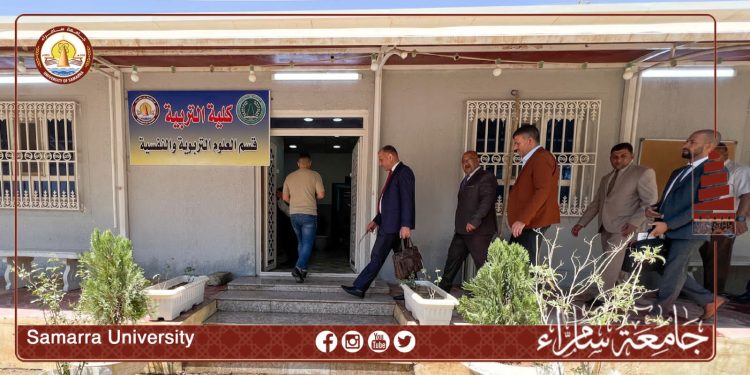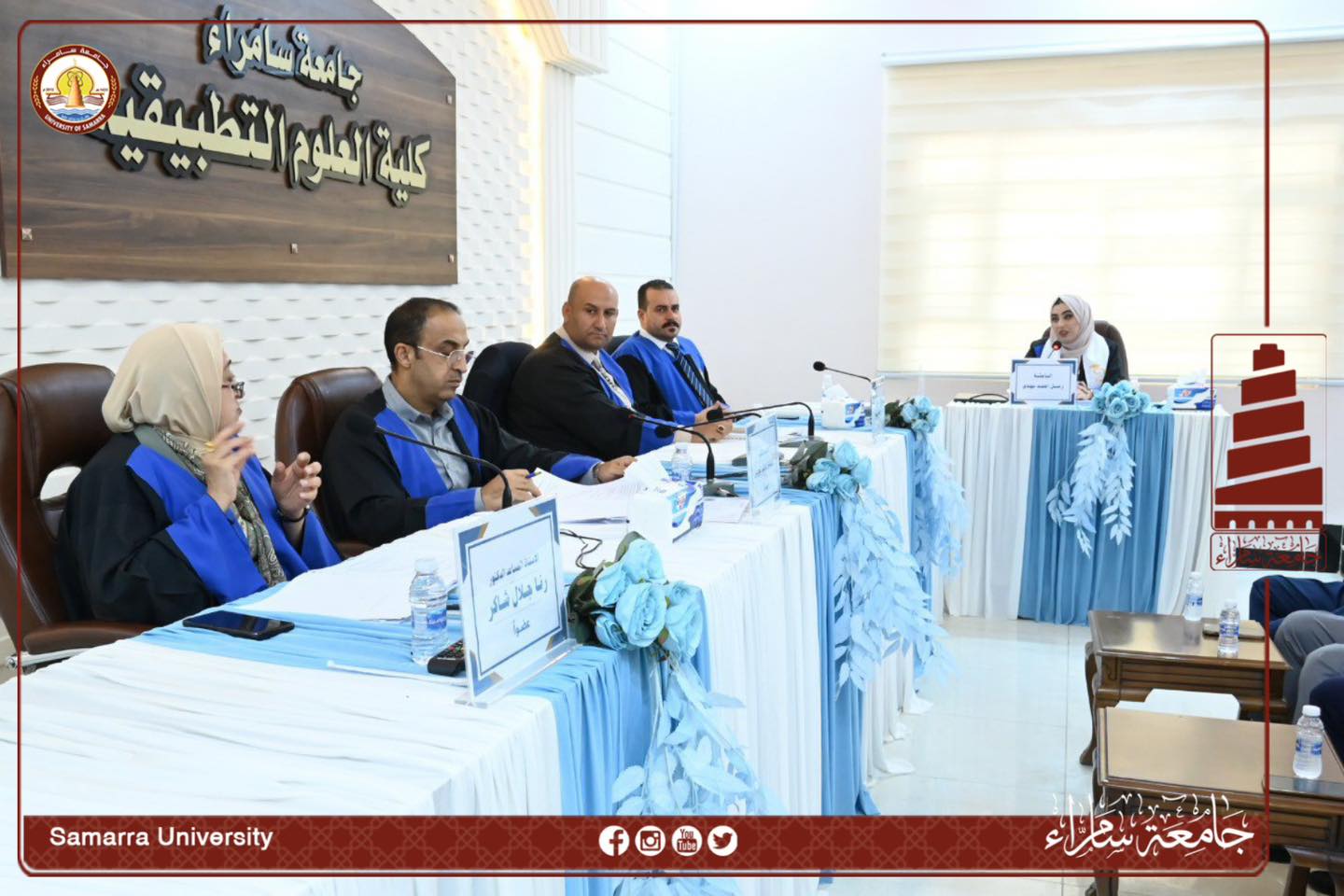
A master’s thesis at Samarra University discusses the isolation and diagnosis of bacteria from wounds and burns.
The thesis, presented by the student (Rasul Ahmed Mahdi) at the College of Education at Samarra University, is titled “Isolation and Diagnosis of Pseudomonas aeruginosa from Wounds, Burns, and Urine and Comparison of the Effect of Biologically Prepared Copper Oxide Nanoparticles from Ficus Sycomorus Leaf Extract with Antibiotics on Them from Samarra General Hospital.”
The student aimed to find a safe, environmentally friendly, and cost-effective method for producing copper oxide nanoparticles from fig leaf extract and to study their role in inhibiting and killing pathogenic bacteria, specifically Pseudomonas aeruginosa, isolated and diagnosed from wounds, burns, and urine, as well as to examine their synergistic effects with some common antibiotics.
The results indicated that the visible and ultraviolet spectrophotometry analysis using a UV/Vis Spectrophotometer showed two absorption peaks at wavelengths of 276 and 360 nanometers, while atomic force microscopy results revealed that the surface roughness of the copper oxide nanoparticles was 34.63 nanometers.