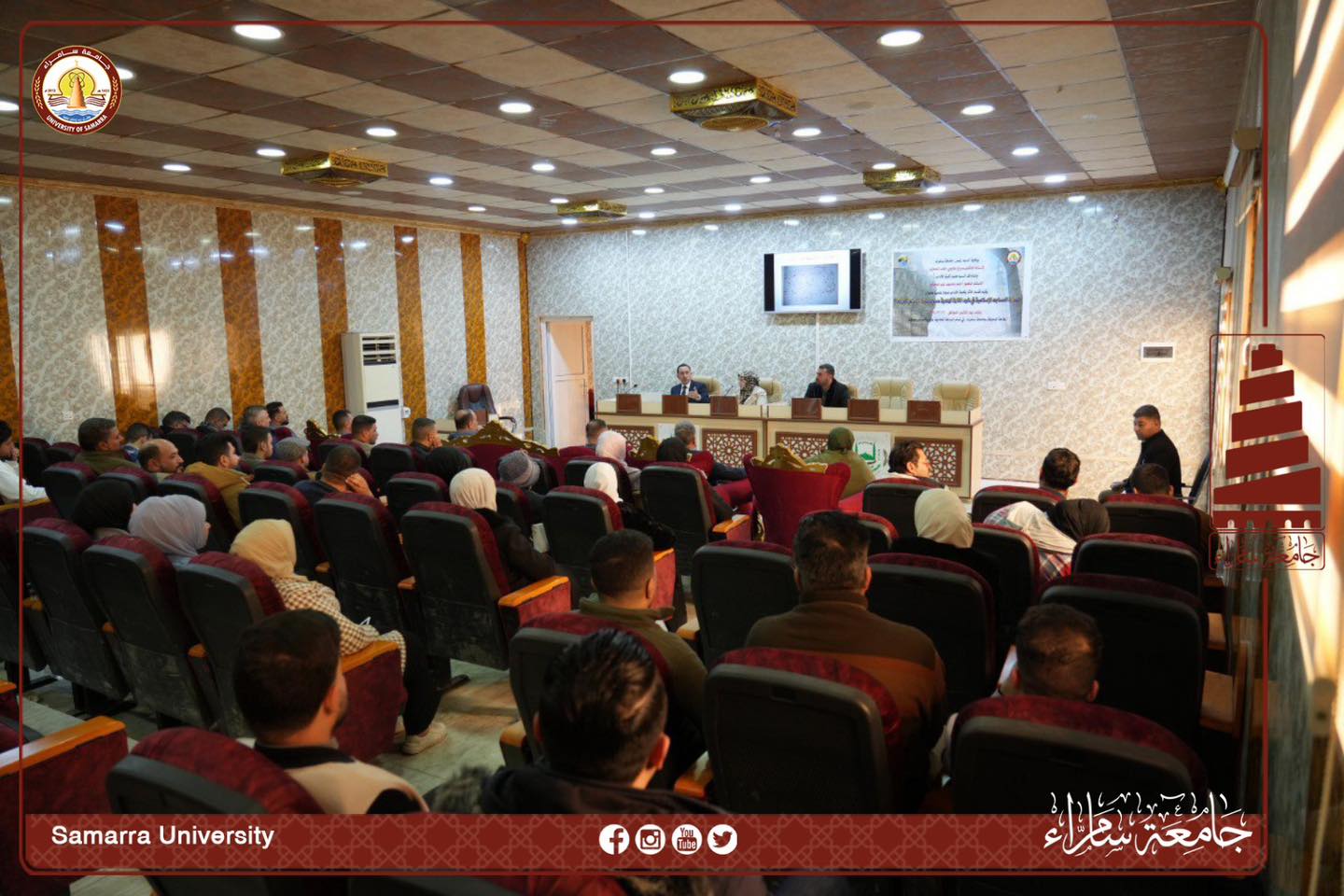
A seminar at the University of Samarra’s Archaeology Department discusses the architecture of the Quwwat-ul-Islam Mosque in India
The Archaeology Department in the College of Arts at the University of Samarra held a scientific seminar titled “The Architecture of Islamic Mosques in the Indian Subcontinent,” delivered by Professor Dr. Ibrahim Hussein Khalaf, a faculty member in the department.
The seminar focused on the Quwwat-ul-Islam Mosque as a model of the evolution of mosque architecture in the Indian subcontinent. It highlighted the mosque as a reflection of the richness of Islamic architecture in India and a prominent landmark, despite the disappearance of most early mosques due to the fragility of their construction.
The seminar also explored the significance of studying Islamic architecture in India, which represents a vital part of Islamic heritage. Special attention was given to the diversity of architectural styles, such as the traditional style, the style with iwans, the enclosed style, and the single-canopy style. Additionally, the seminar reviewed the efforts of Muslims in spreading Islam in India.
Dr. Hussein recommended choosing research topics related to Islamic architectural styles, focusing on unexplored and unconventional Islamic sites. He also emphasized the importance of studying the exchange of cultural influences among different societies and incorporating them into Islamic architecture.